Conveyor Software for High-Volume Warehouses
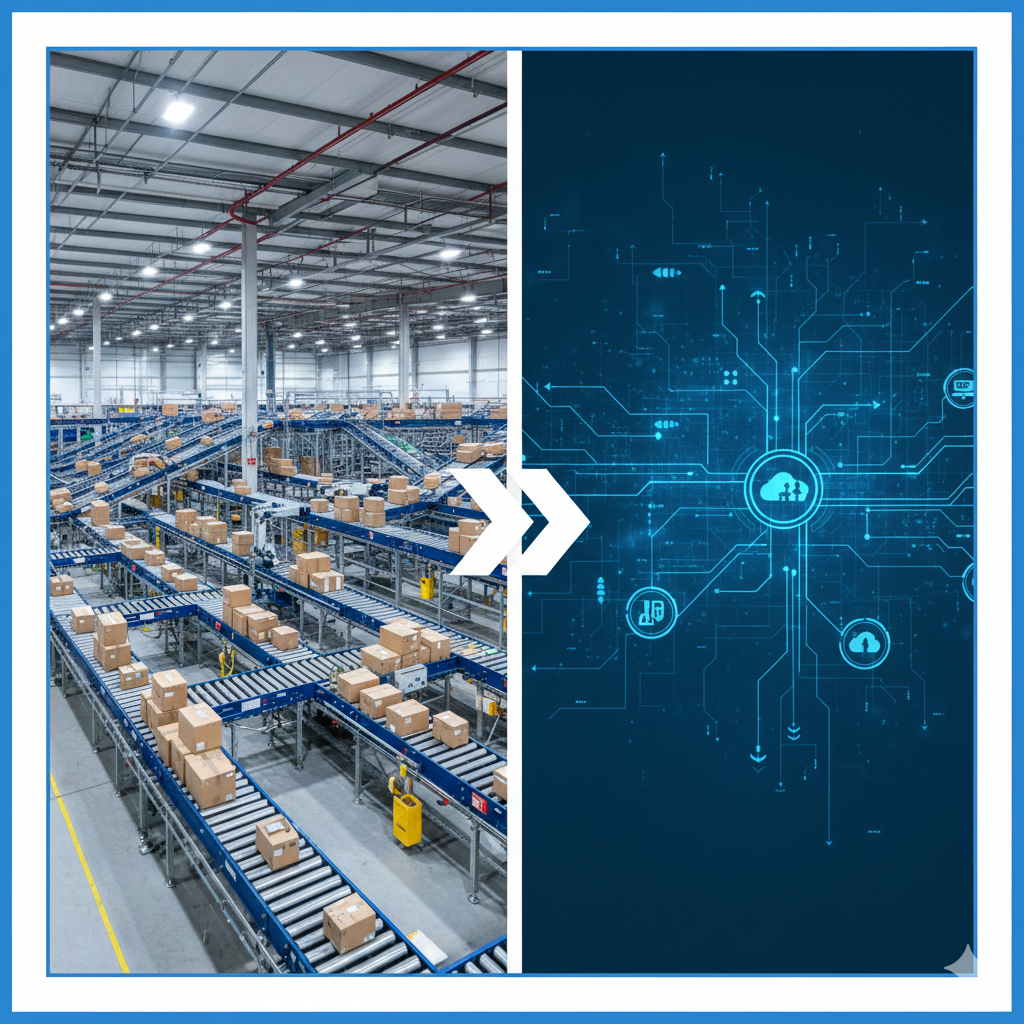
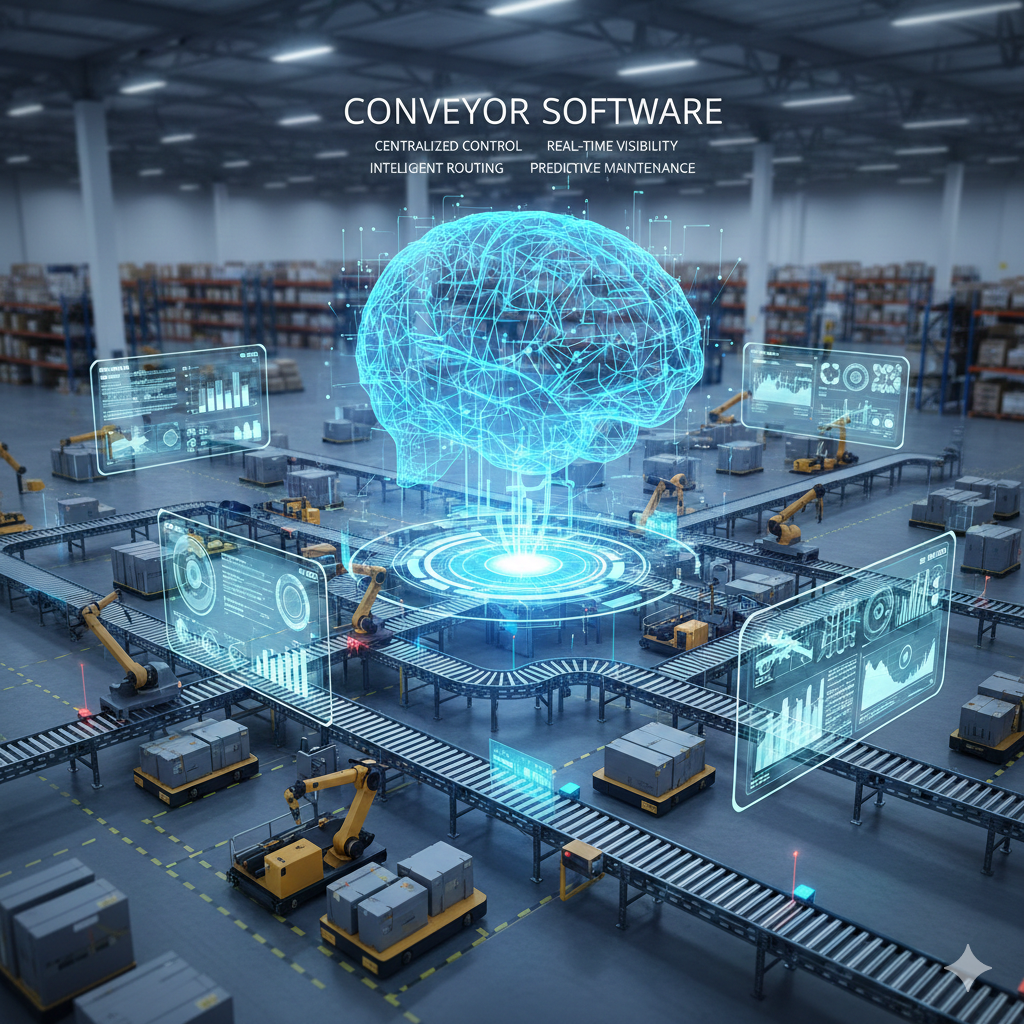
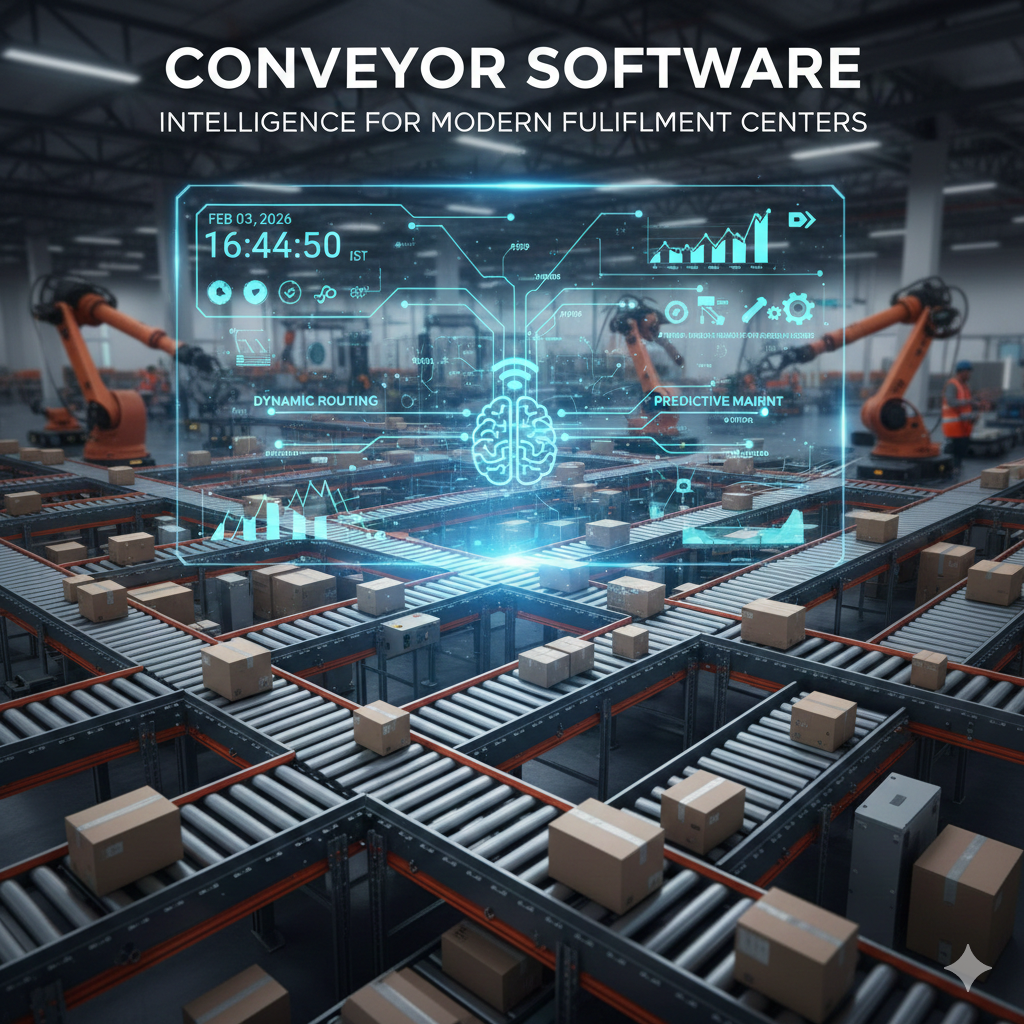
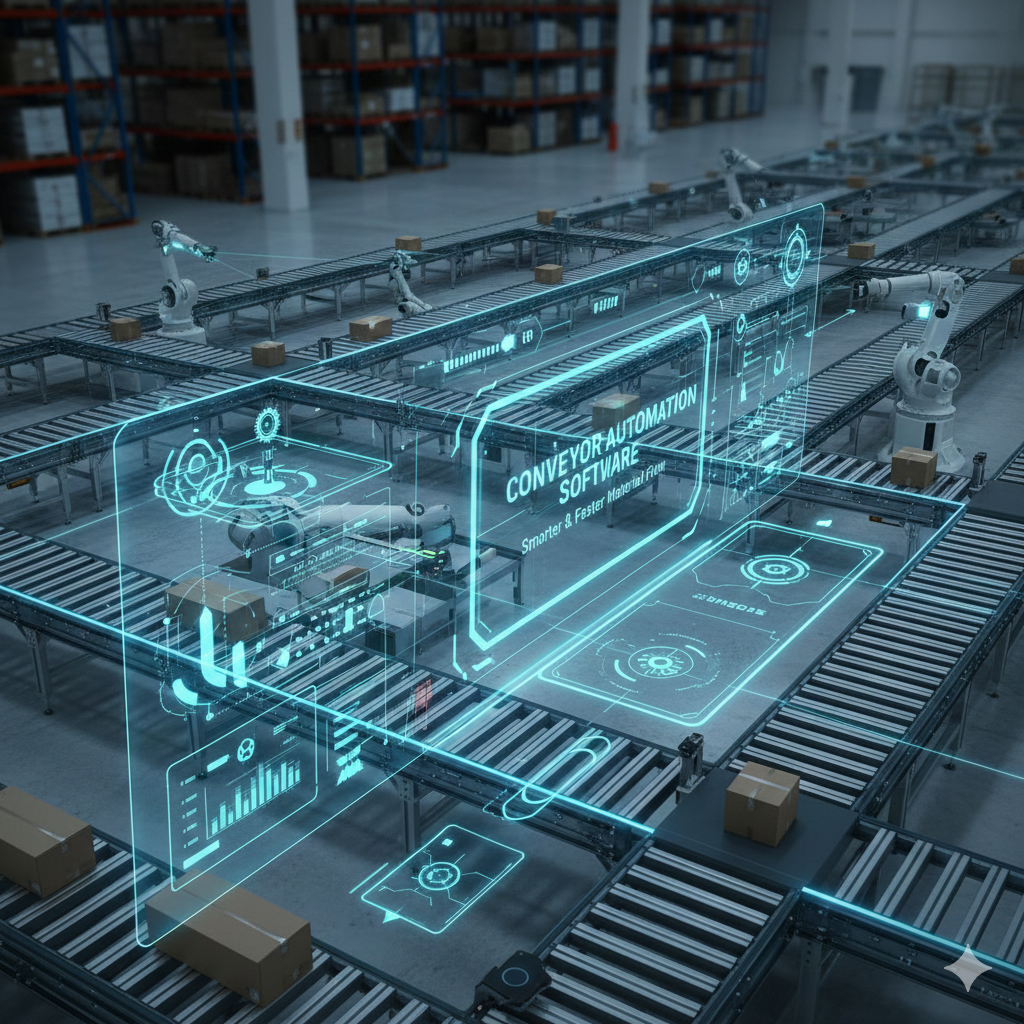
High-volume warehouses operate under constant pressure to move goods faster, accurately, and at scale. Conveyor systems form the physical backbone of these operations—but it’s conveyor software that determines how efficiently everything flows. In fast-paced fulfillment environments, intelligent conveyor software is essential for maintaining throughput, reducing downtime, and meeting tight delivery SLAs. 🚀
Why High-Volume Warehouses Need Advanced Conveyor Software ⚙️
- Order volumes fluctuate throughout the day 📊
- Peak seasons create extreme throughput demands 📈
- Manual control cannot react fast enough ⏱️
- Bottlenecks quickly cascade across the system 🔗
- Downtime directly impacts revenue and customer satisfaction 💰
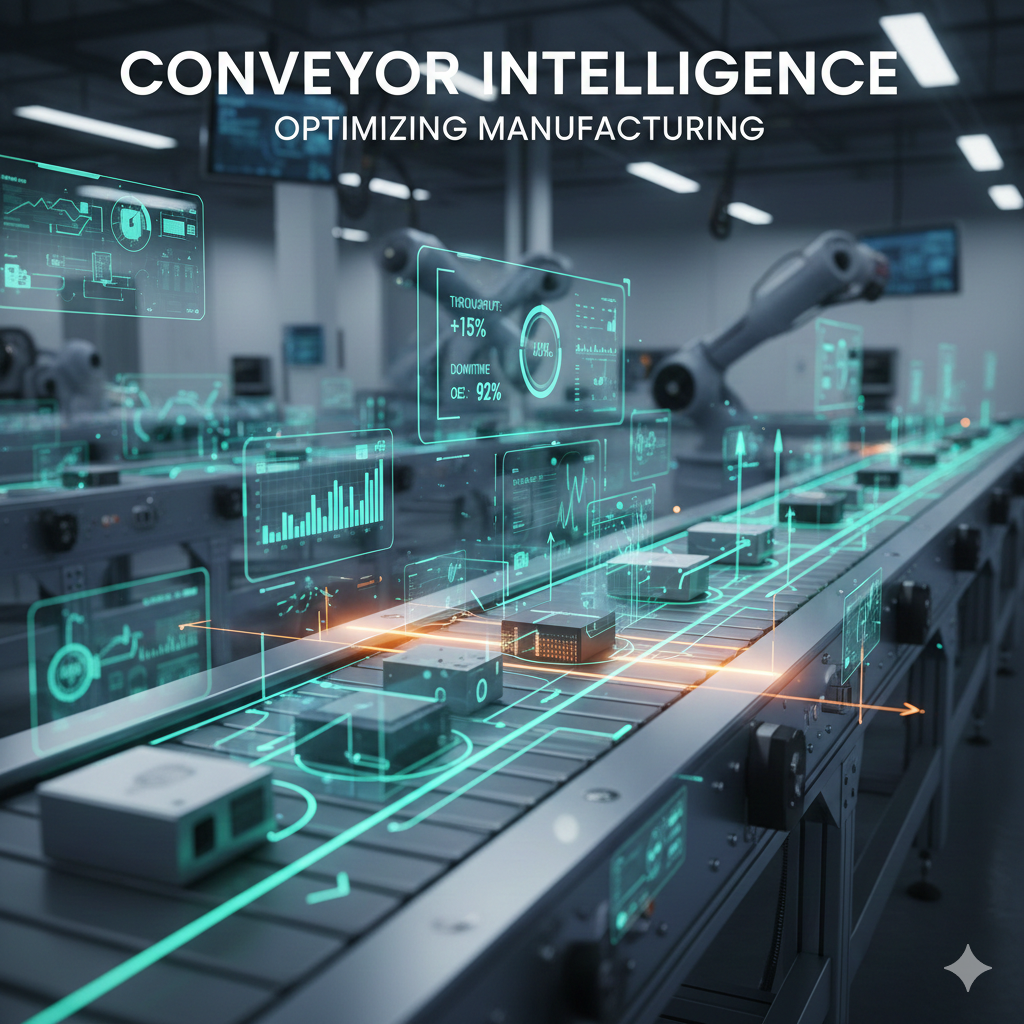
Core Capabilities of Conveyor Software in High-Volume Environments 🧠
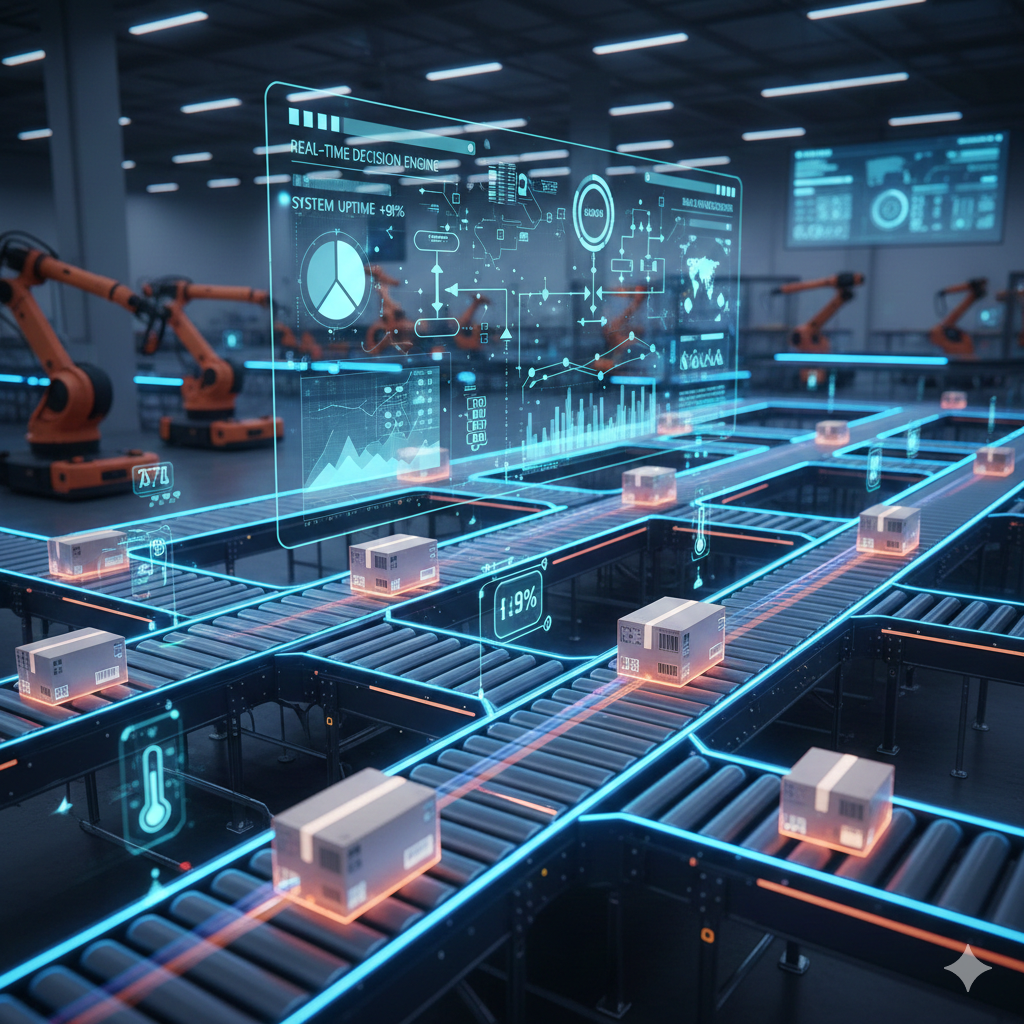
Real-Time Flow Control ⚡
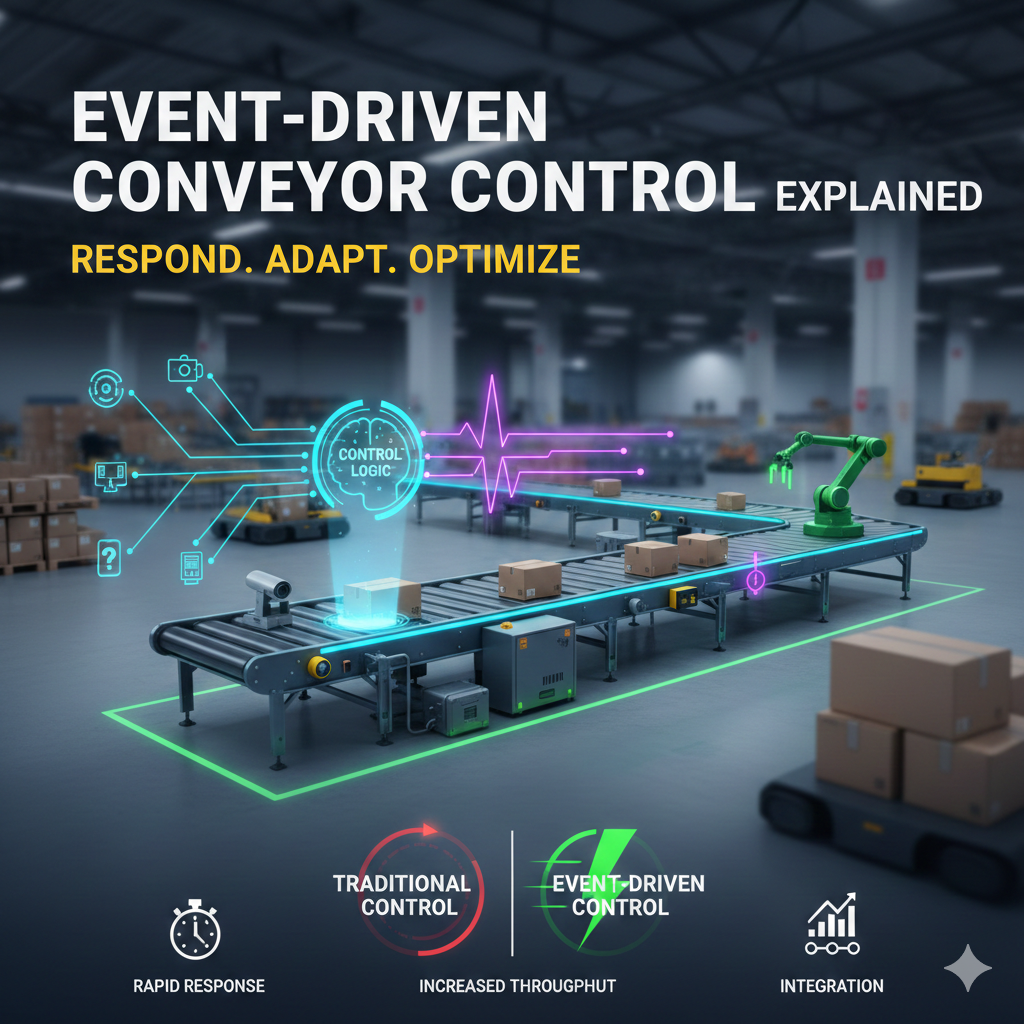
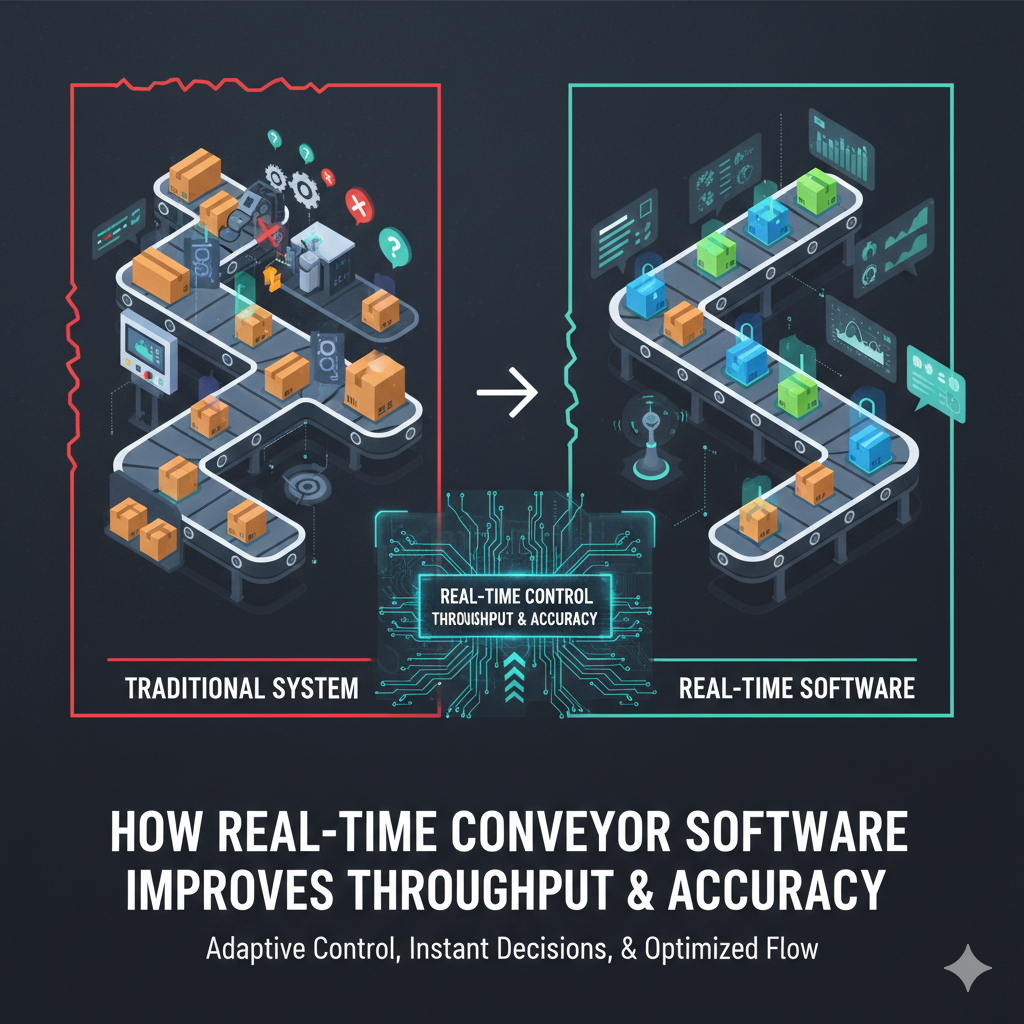
- Monitors conveyor speed, load, and routing continuously 📡
- Adjusts flow instantly based on demand 🔄
- Prevents congestion before it escalates 🚫
- Maintains consistent throughput during peak periods 📈
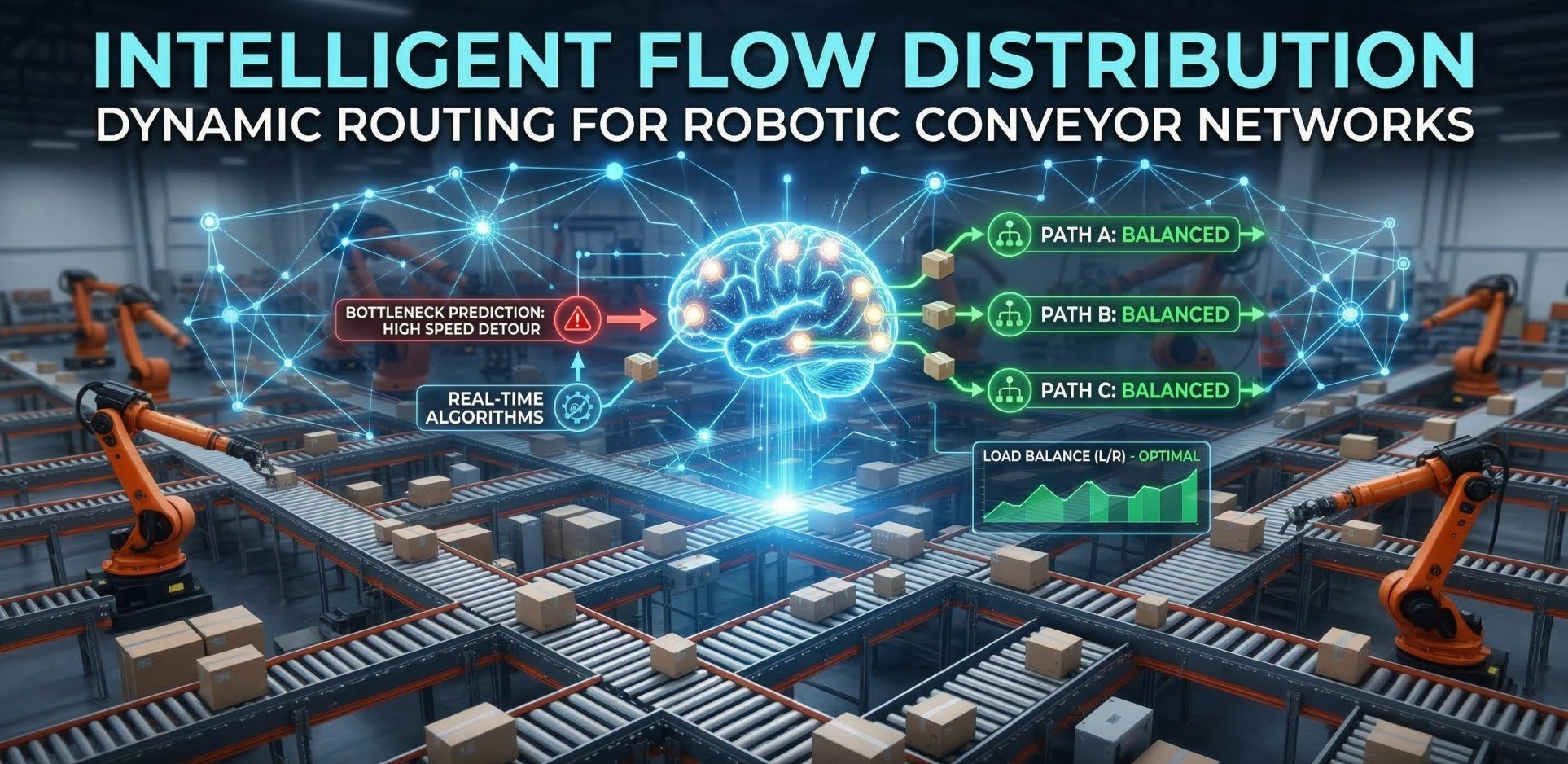
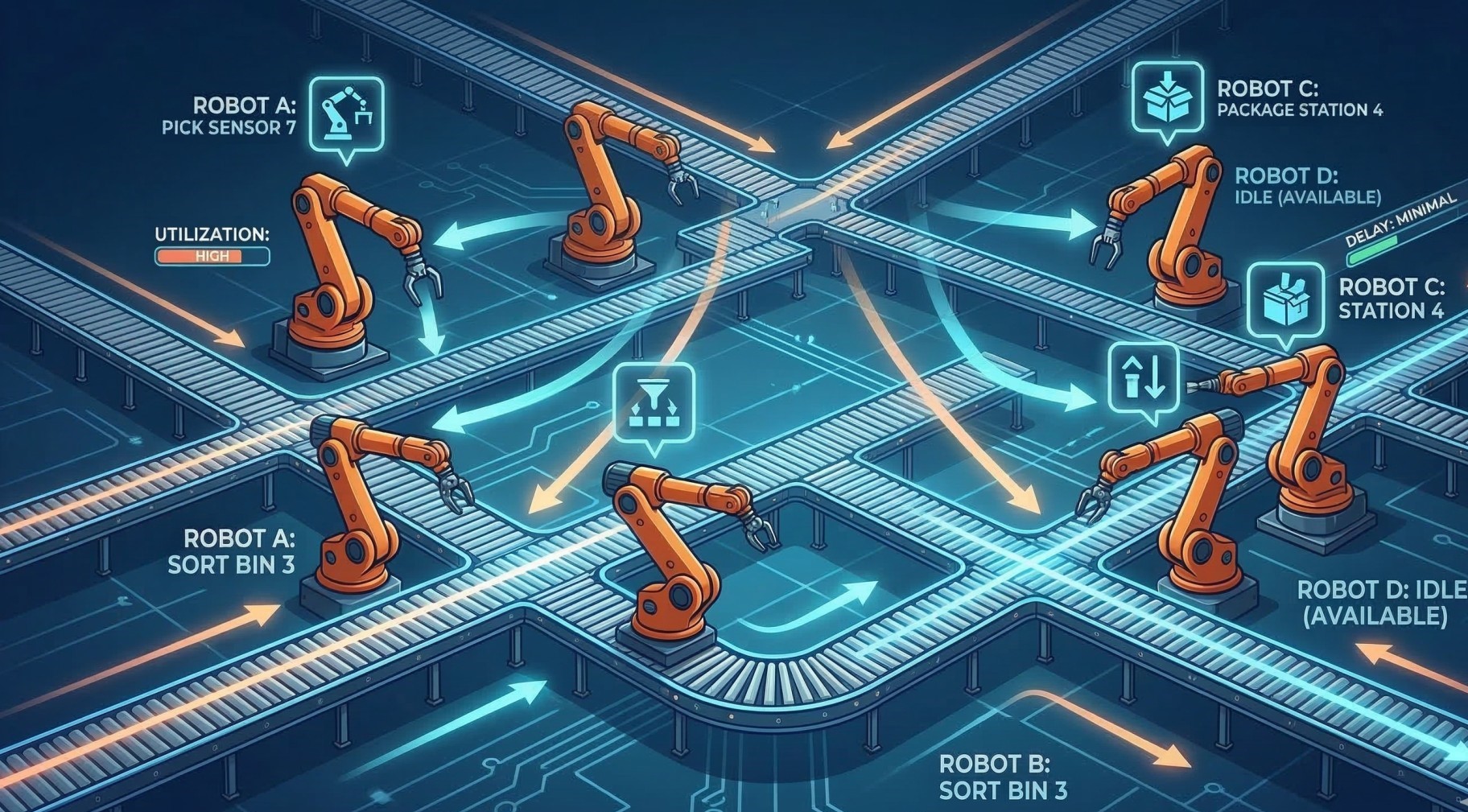
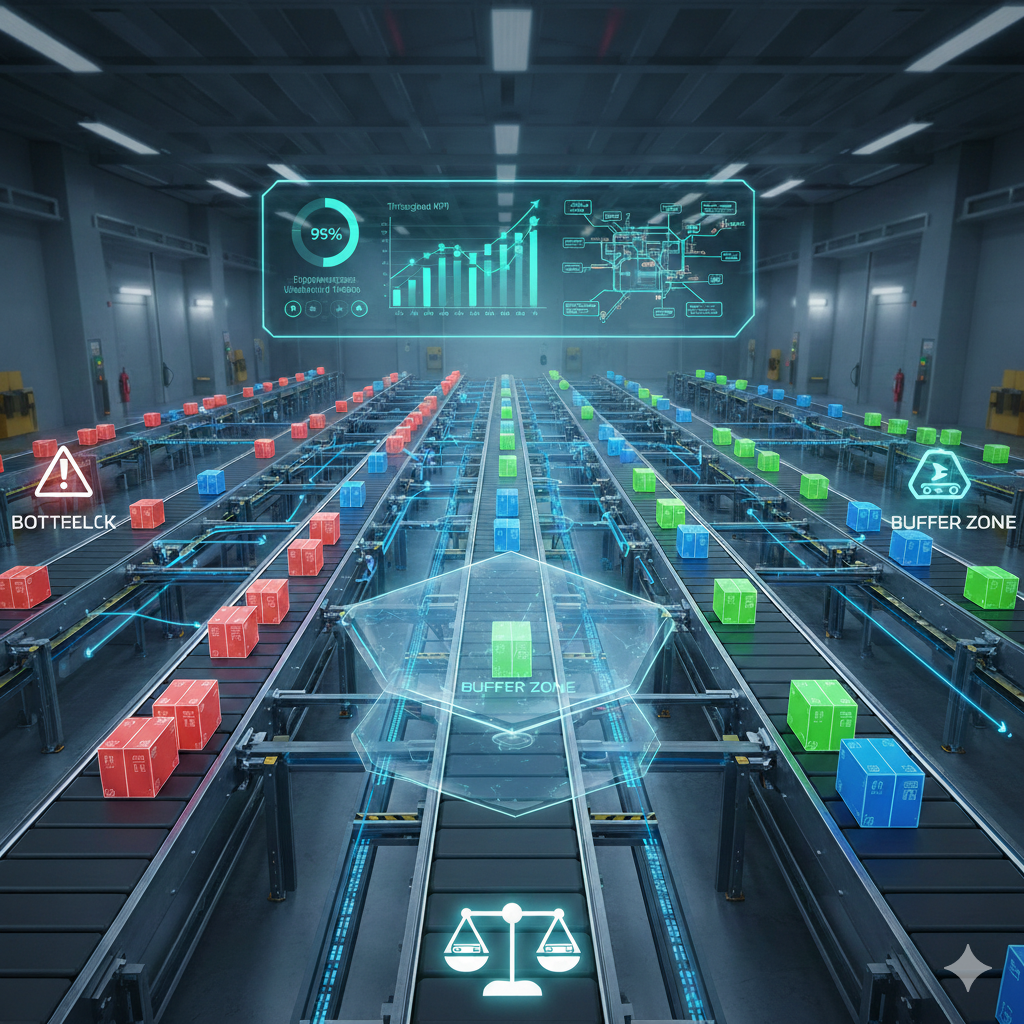
Dynamic Routing and Load Balancing 🔀
- Routes cartons and totes across multiple conveyor paths 📦
- Balances load between zones and sorters ⚖️
- Avoids overloading specific lines 🚧
- Improves overall system utilization 📊
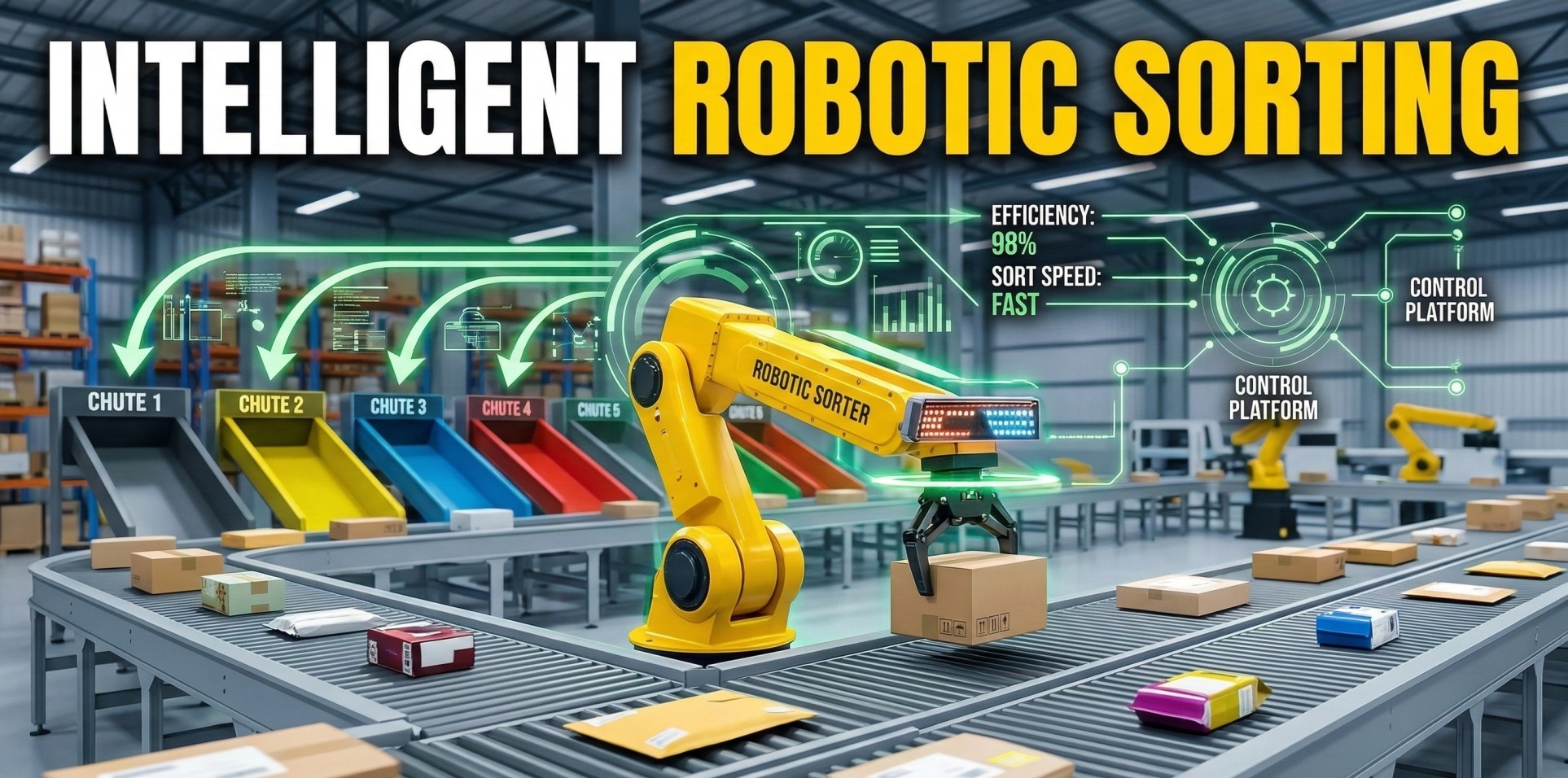
High-Throughput Sortation Logic 🧮
- Optimizes divert timing and sorter decisions ⏱️
- Supports large SKU counts and destinations 🧾
- Maintains accuracy at high speeds 🎯
- Reduces mis-sorts and re-circulation 🔁
Scalability for Peak Operations 📈
- Handles sudden spikes in order volume ⚡
- Scales logic without physical system changes 🧩
- Supports multi-shift, 24/7 operations 🕒
- Performs reliably during seasonal peaks 🛡️
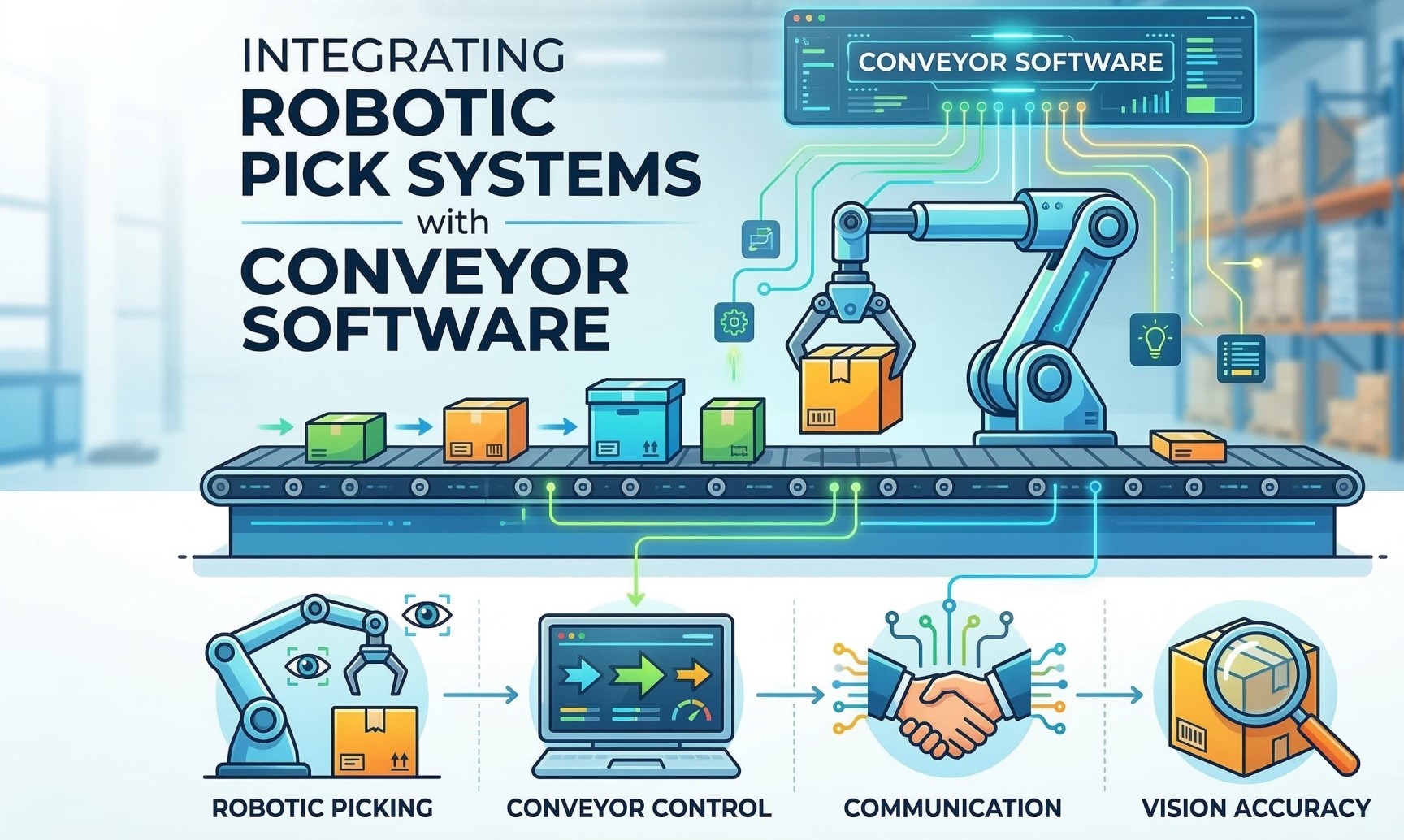
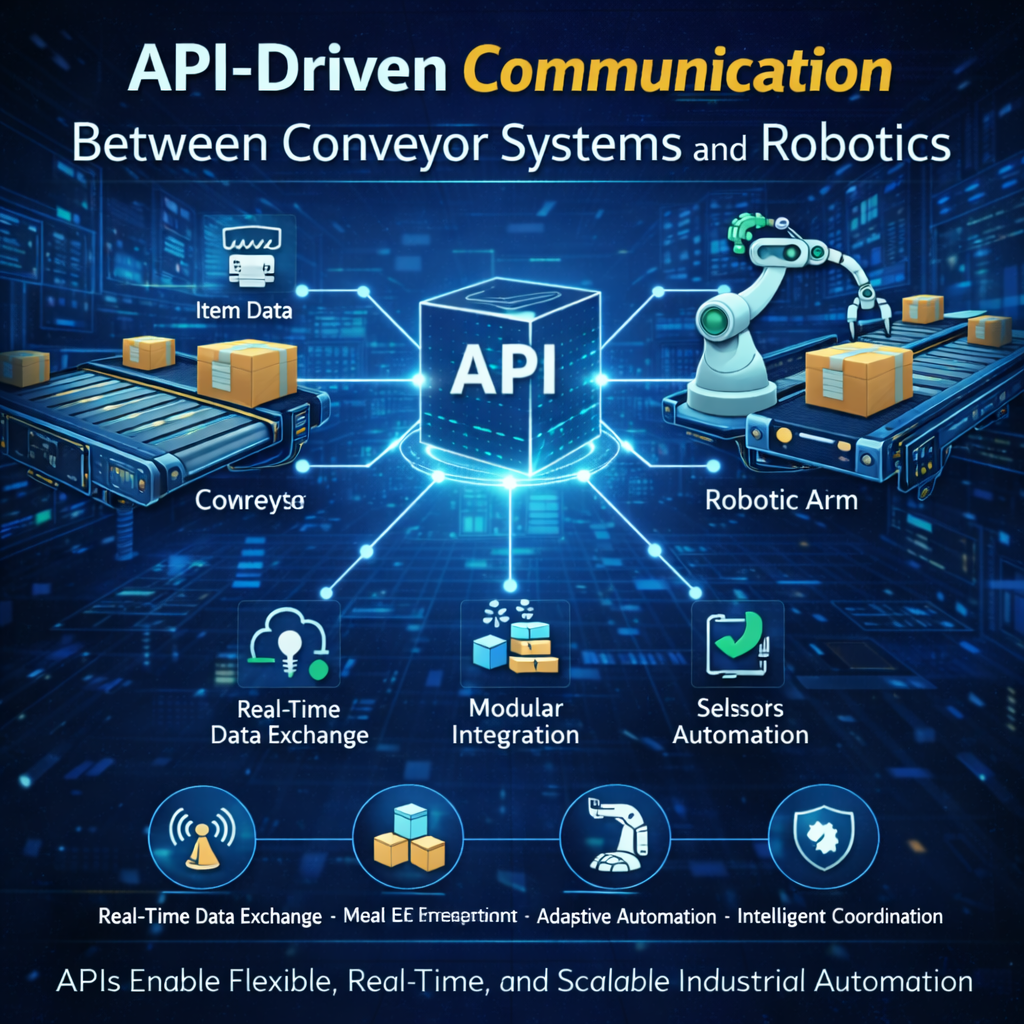
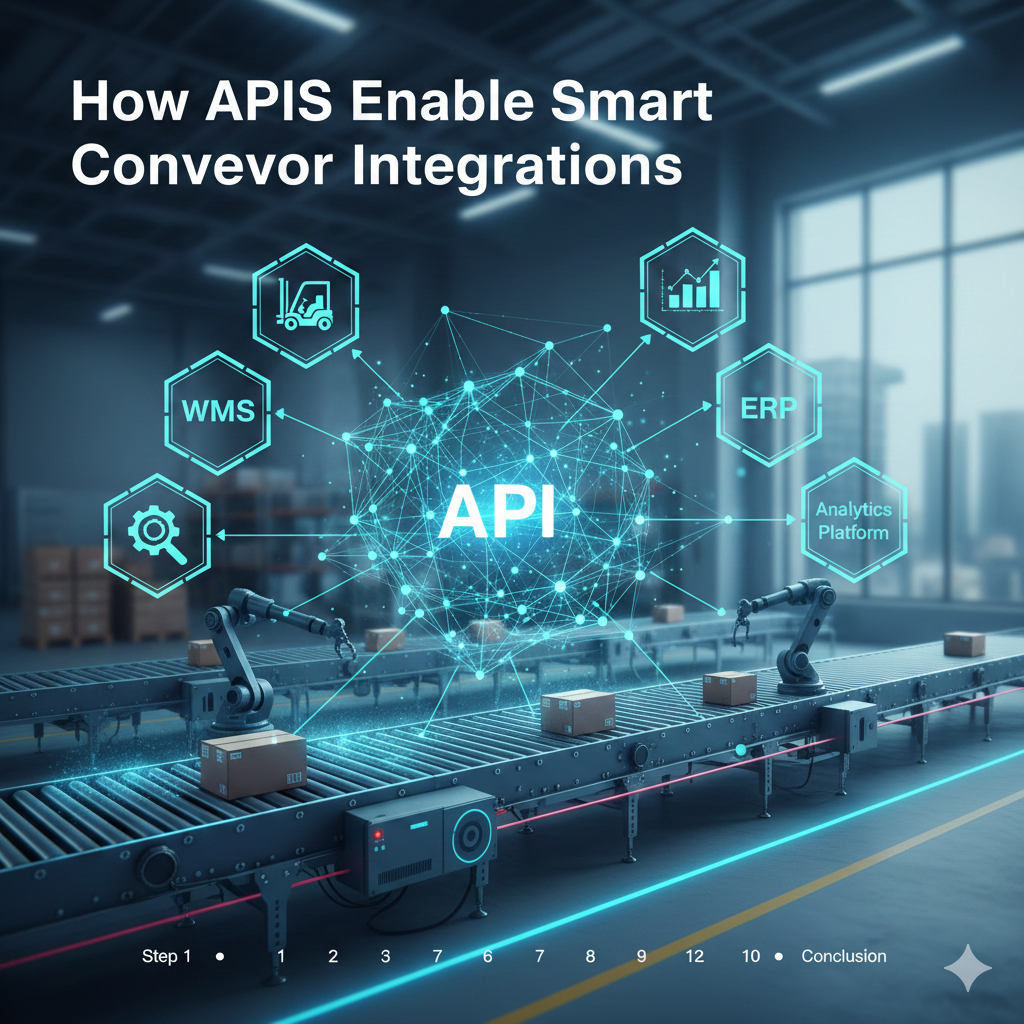
Integration with Warehouse Systems 🔌
- Connects seamlessly with WMS and WCS platforms 🔗
- Receives real-time order and routing instructions 📡
- Syncs inventory, wave planning, and shipping data 🔄
- Ensures end-to-end operational visibility 👀
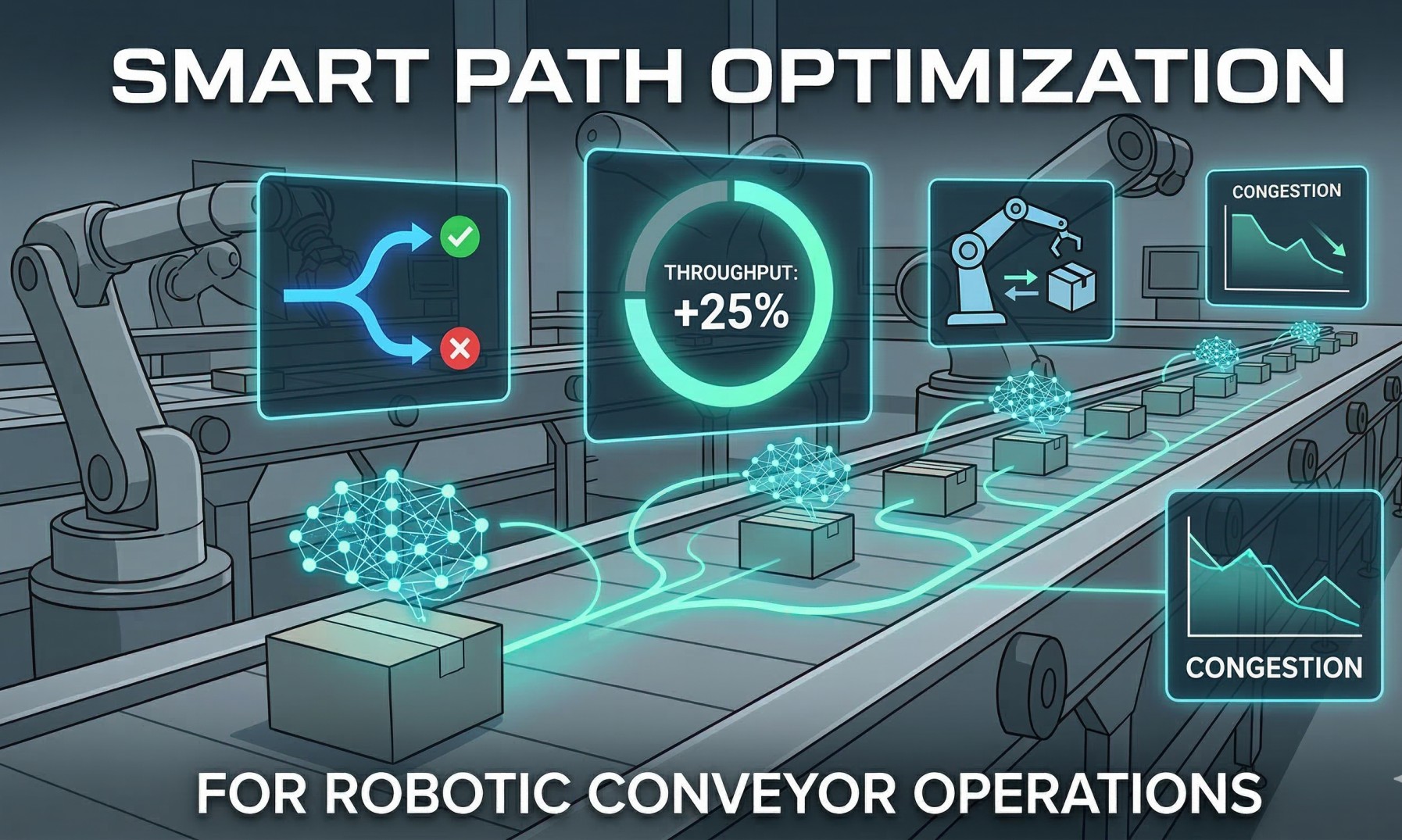
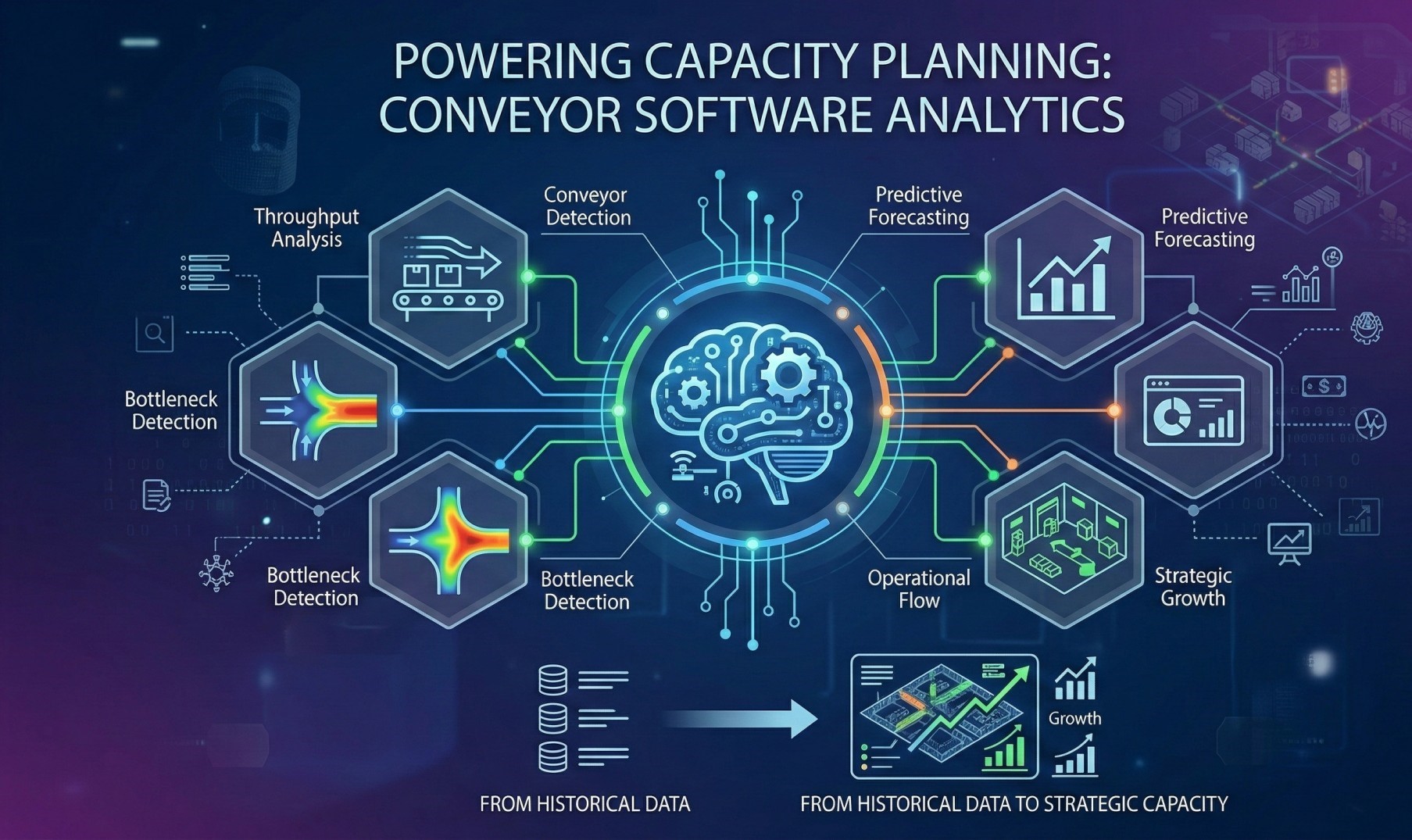
Bottleneck Detection and Congestion Management 🚦
- Identifies congestion patterns early 🔍
- Predicts where backups will occur 🔮
- Automatically redistributes flow 🔄
- Stabilizes operations during peak loads 🛡️
- Reduces manual intervention ❌
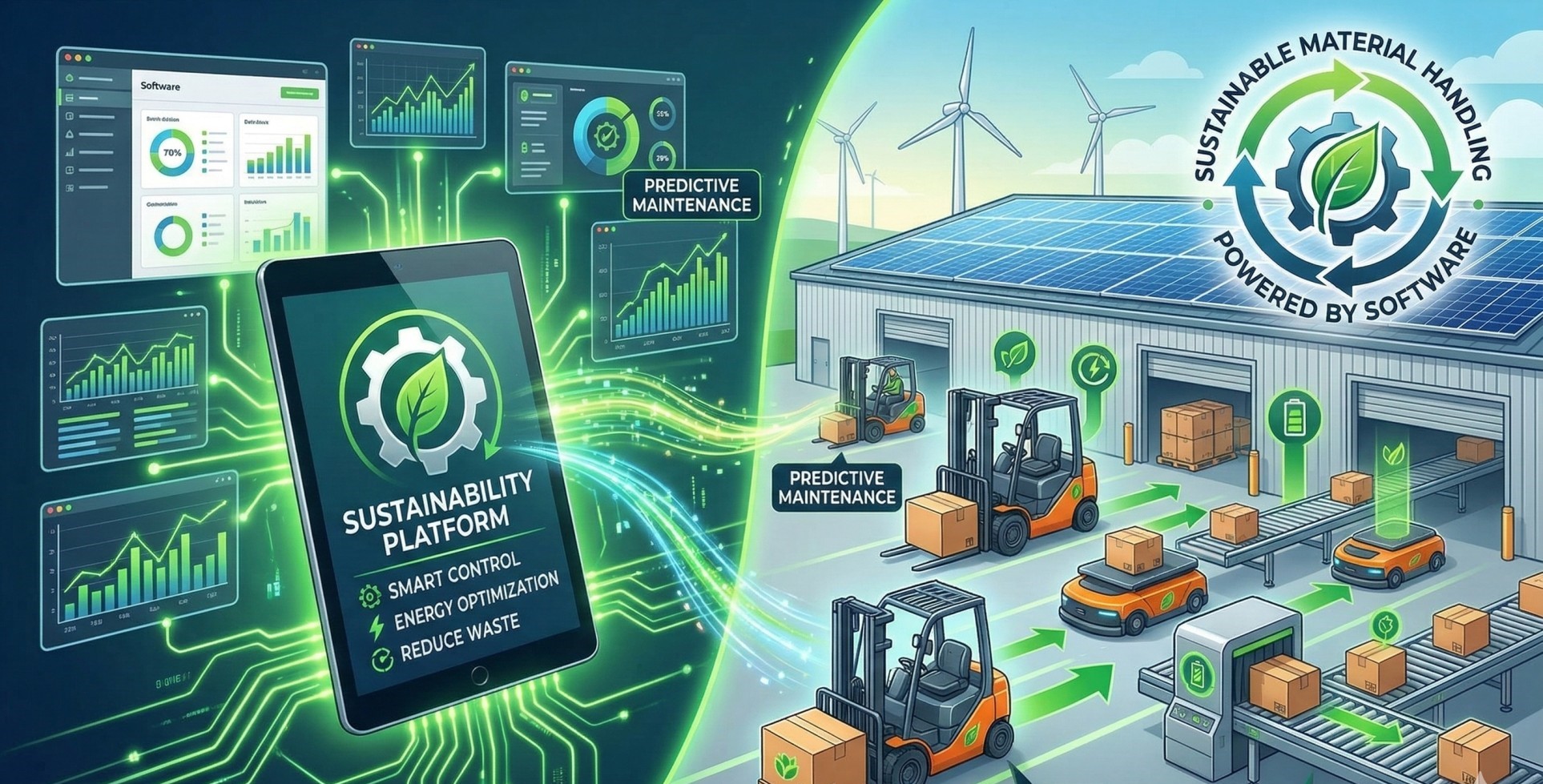
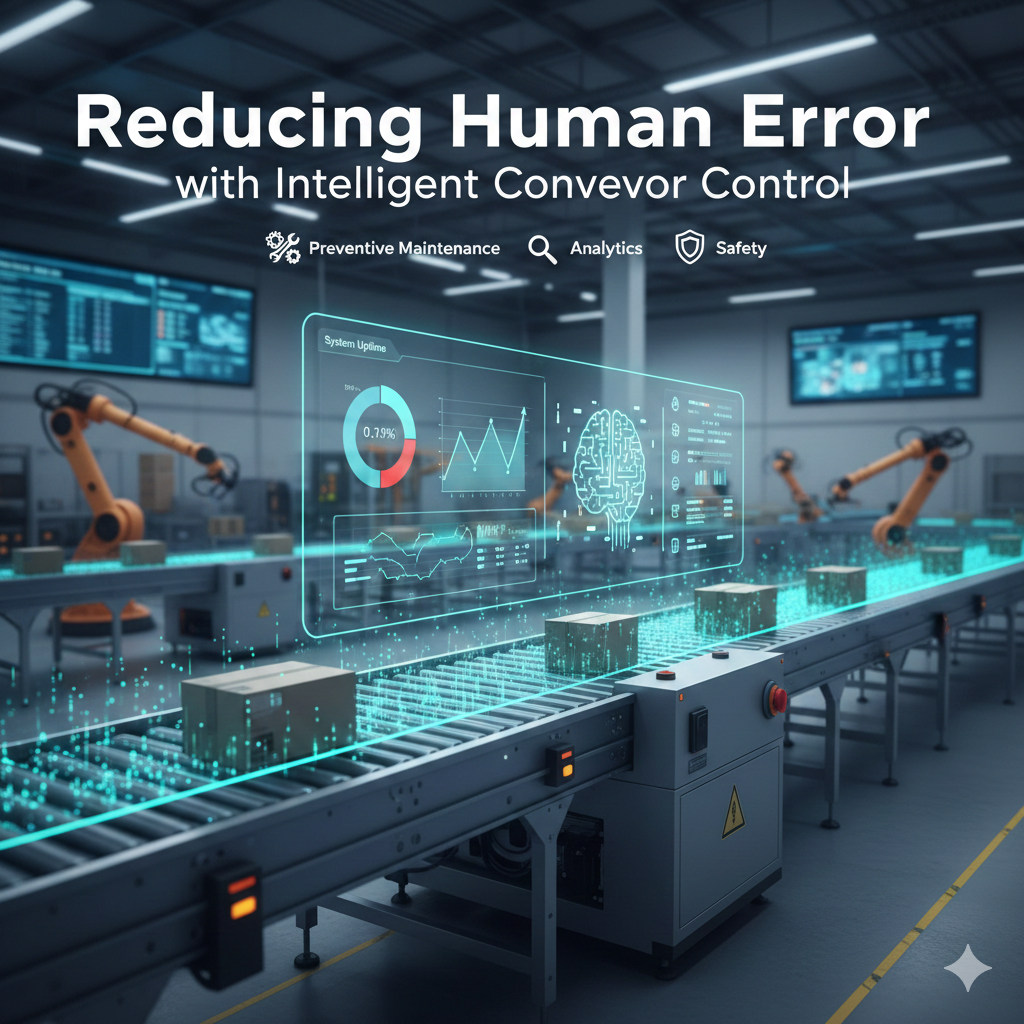
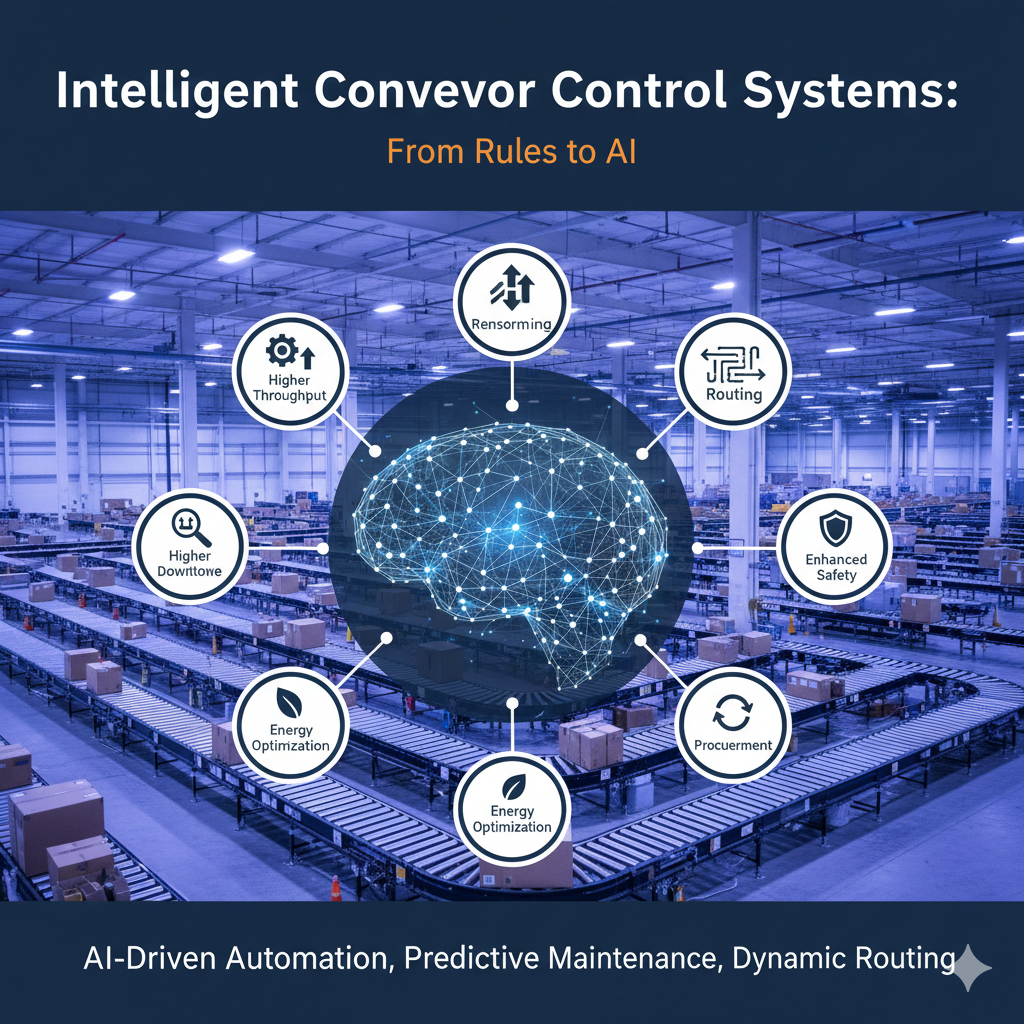
Predictive Maintenance and Reliability 🔧
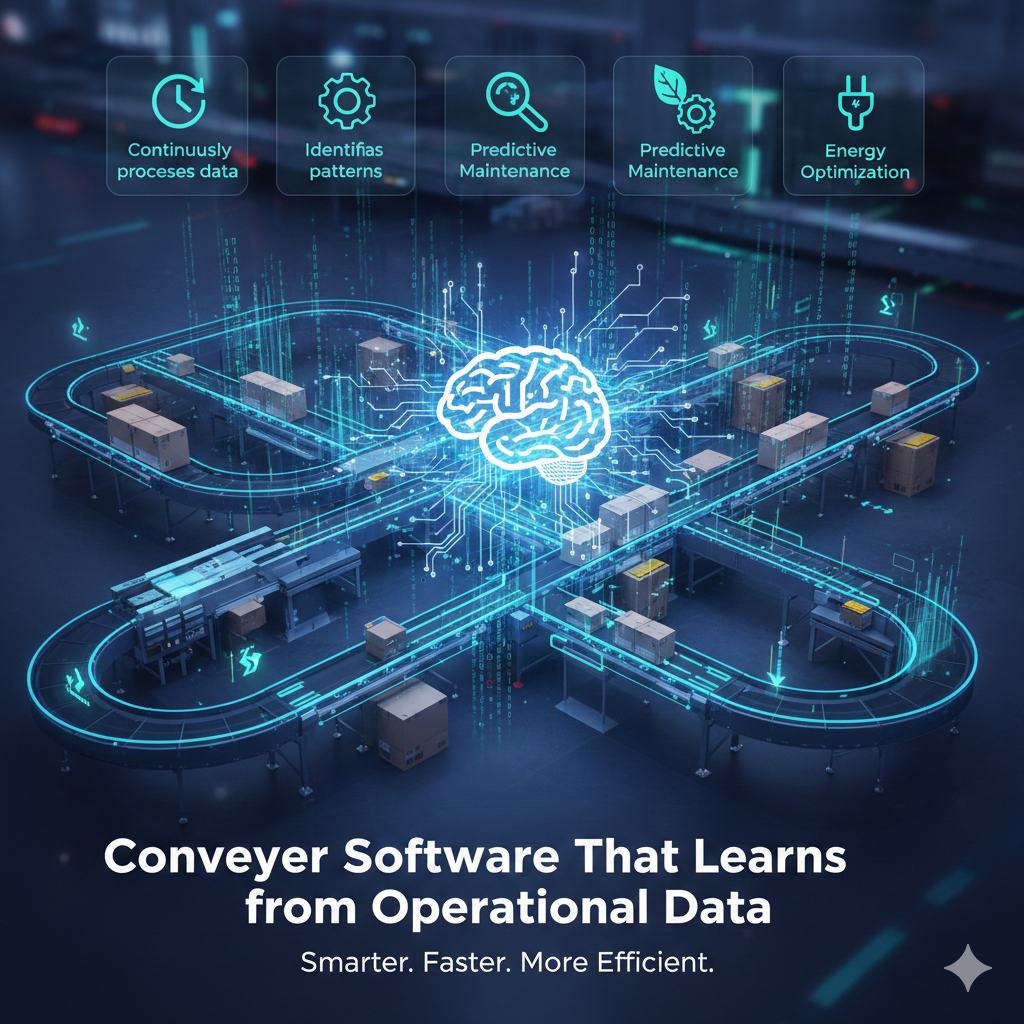
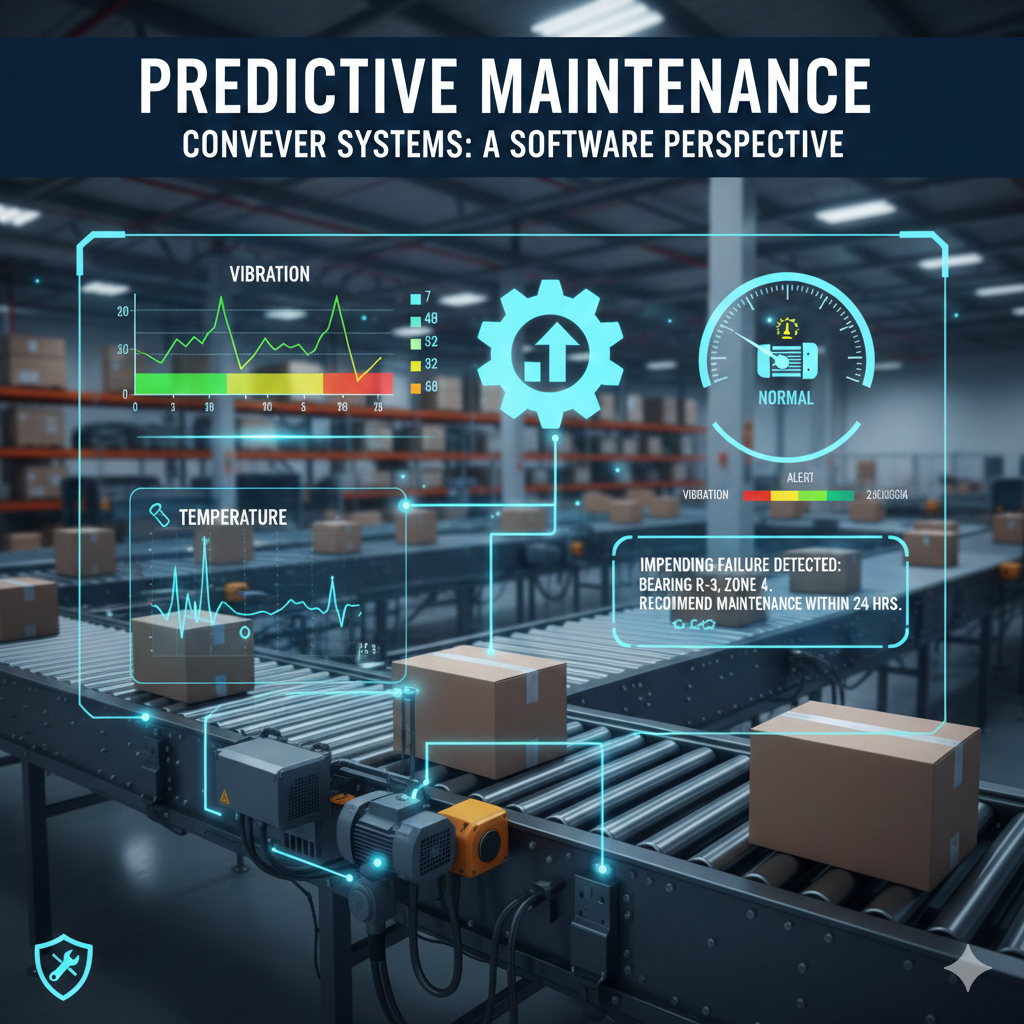
- Monitors motor, sensor, and conveyor health 📊
- Detects abnormal vibration or performance trends 📈
- Predicts failures before breakdowns occur ⚠️
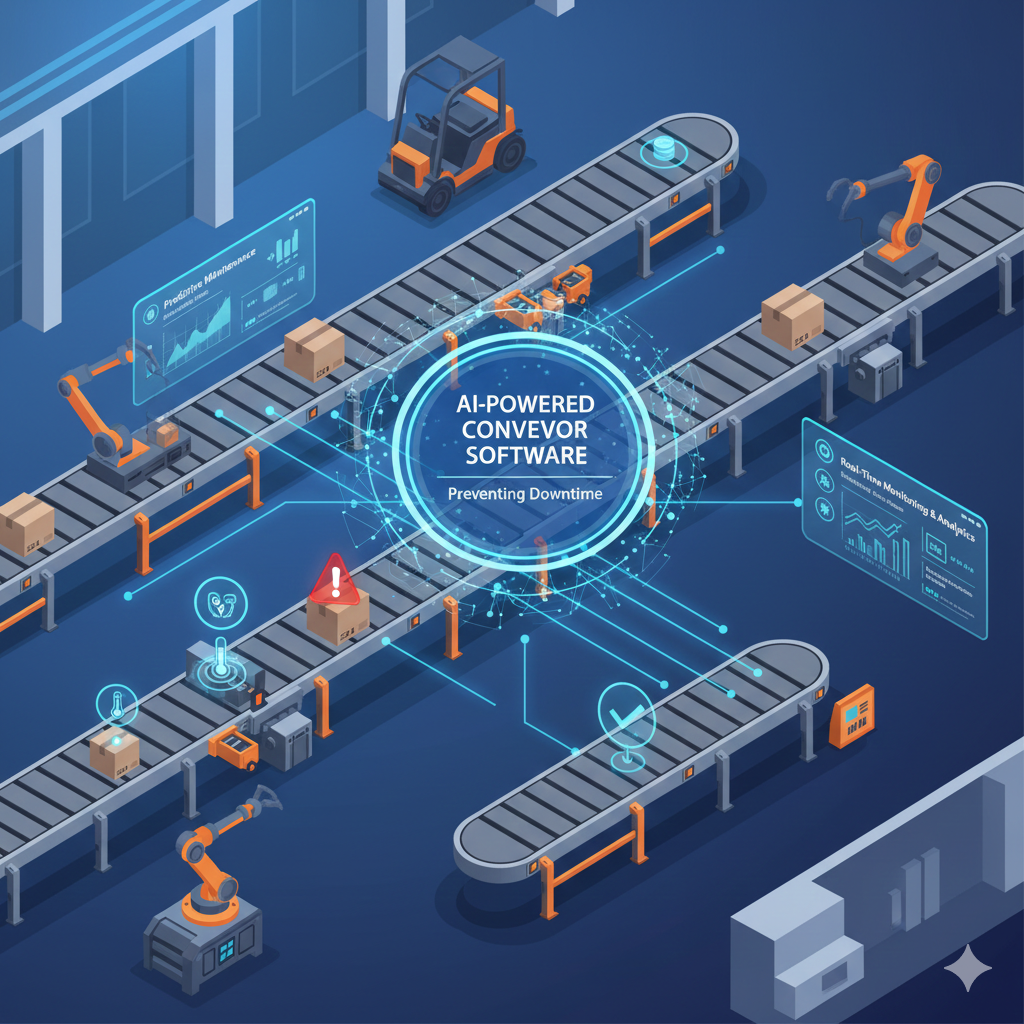
- Reduces unplanned downtime ⏱️
- Extends equipment lifespan 🧰
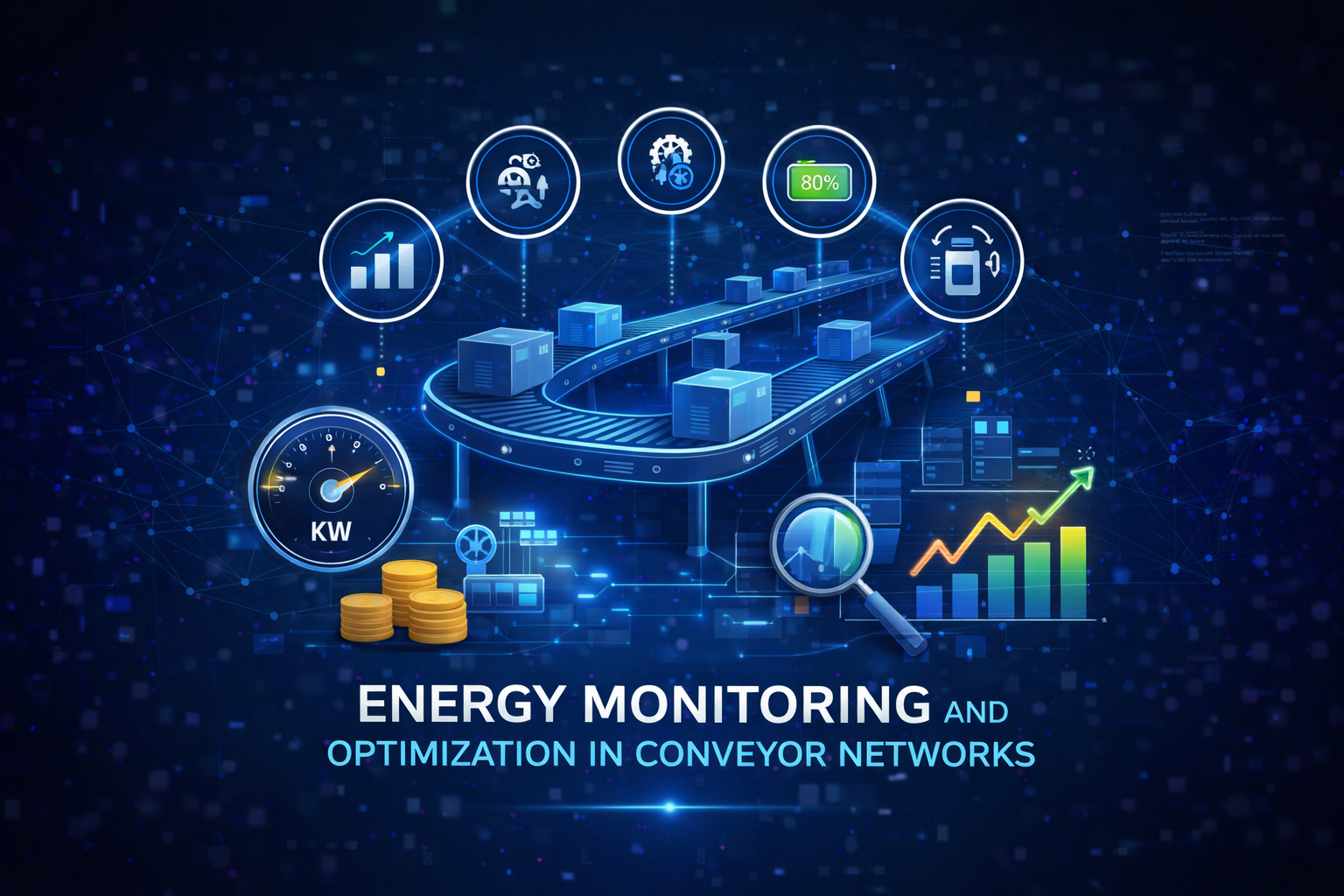
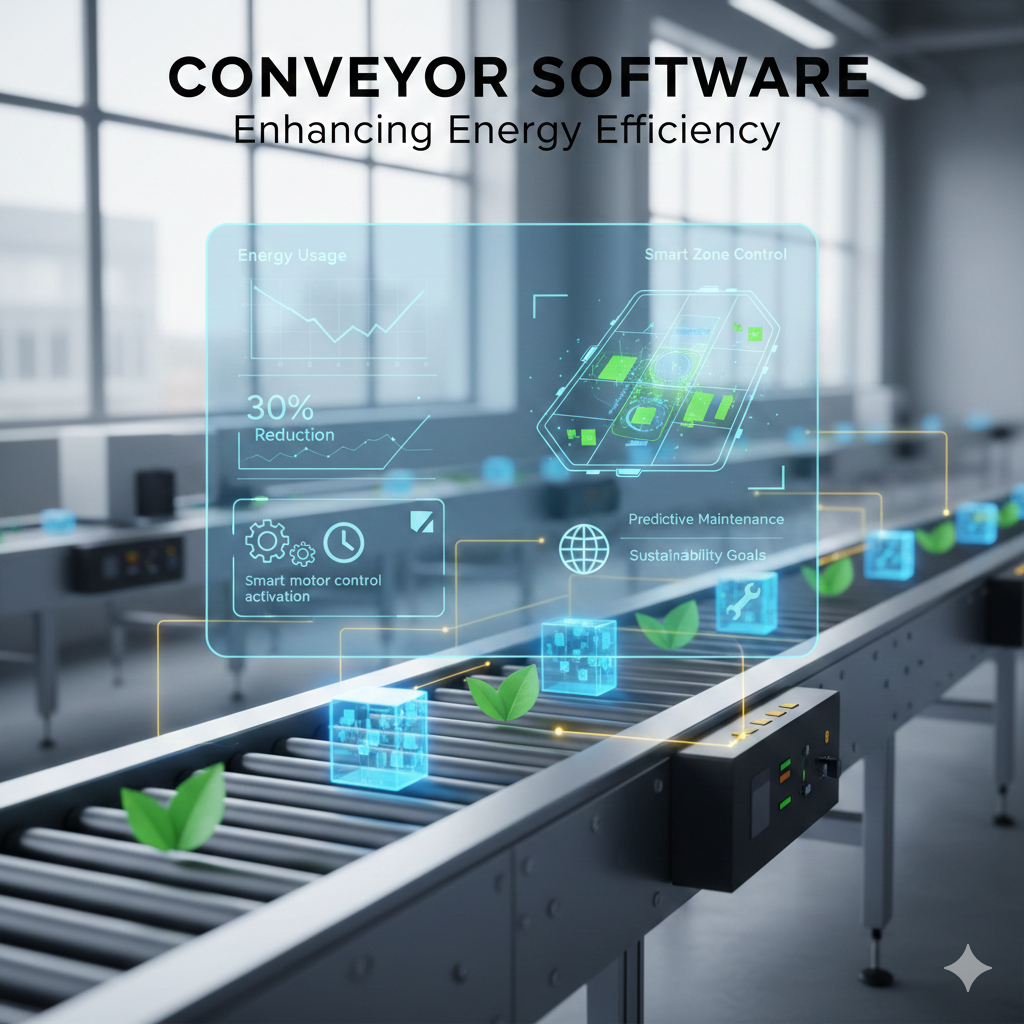
Energy and Cost Optimization 🌱
- Adjusts conveyor speed based on load ⚙️
- Shuts down idle zones automatically 📴
- Reduces unnecessary motor usage 🔋
- Lowers energy consumption and wear 📉
- Supports sustainability initiatives 🌍
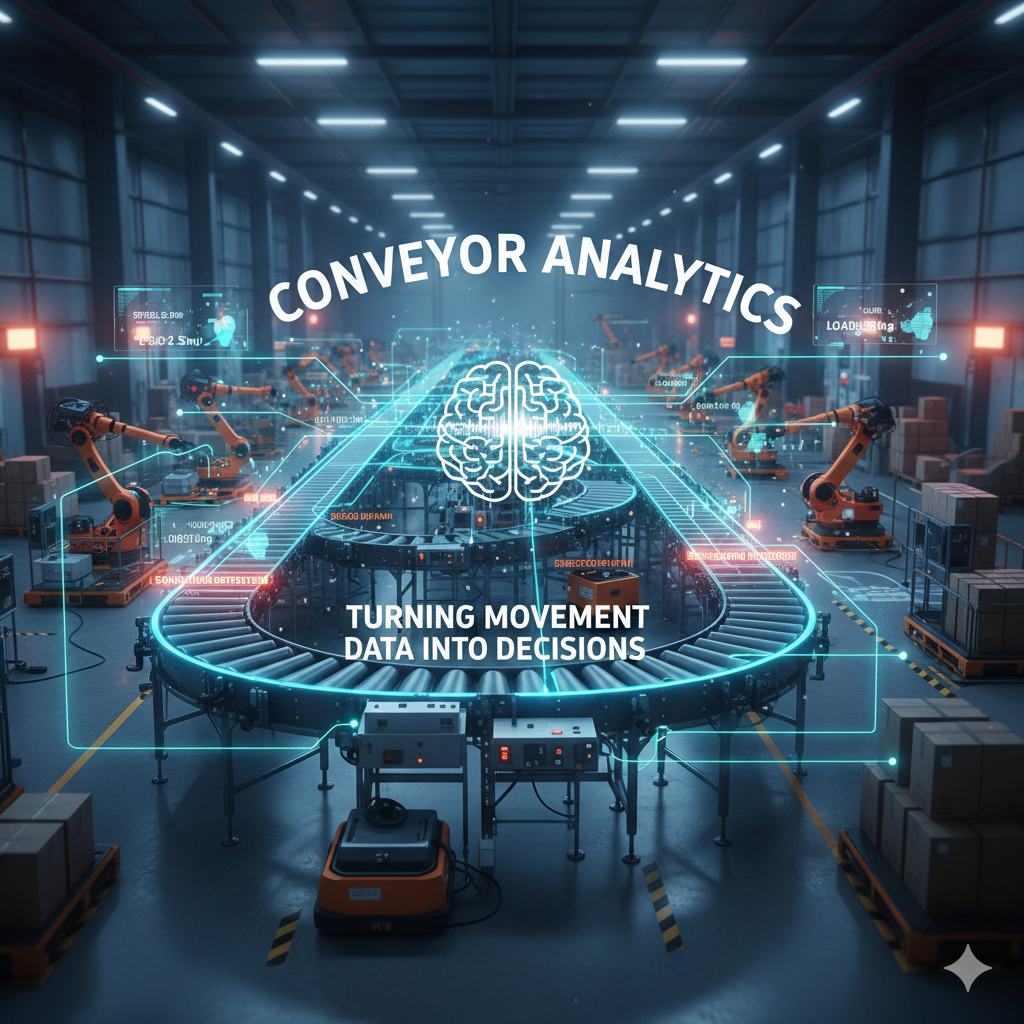
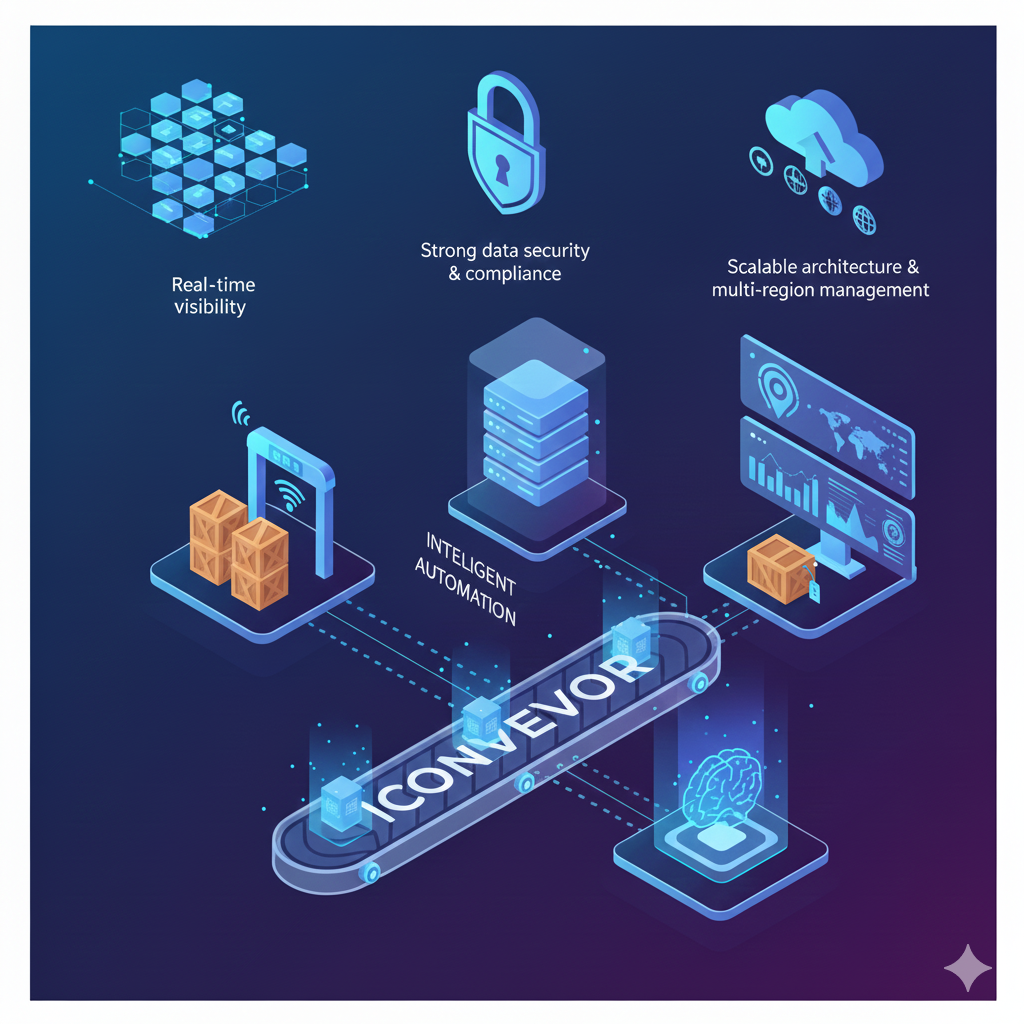
Real-Time Visibility and Control Dashboards 📊
- Displays live throughput and system status 👀
- Tracks zone performance and delays ⏱️
- Alerts operators to issues instantly 🚨
- Supports fast, informed decision-making 🧠
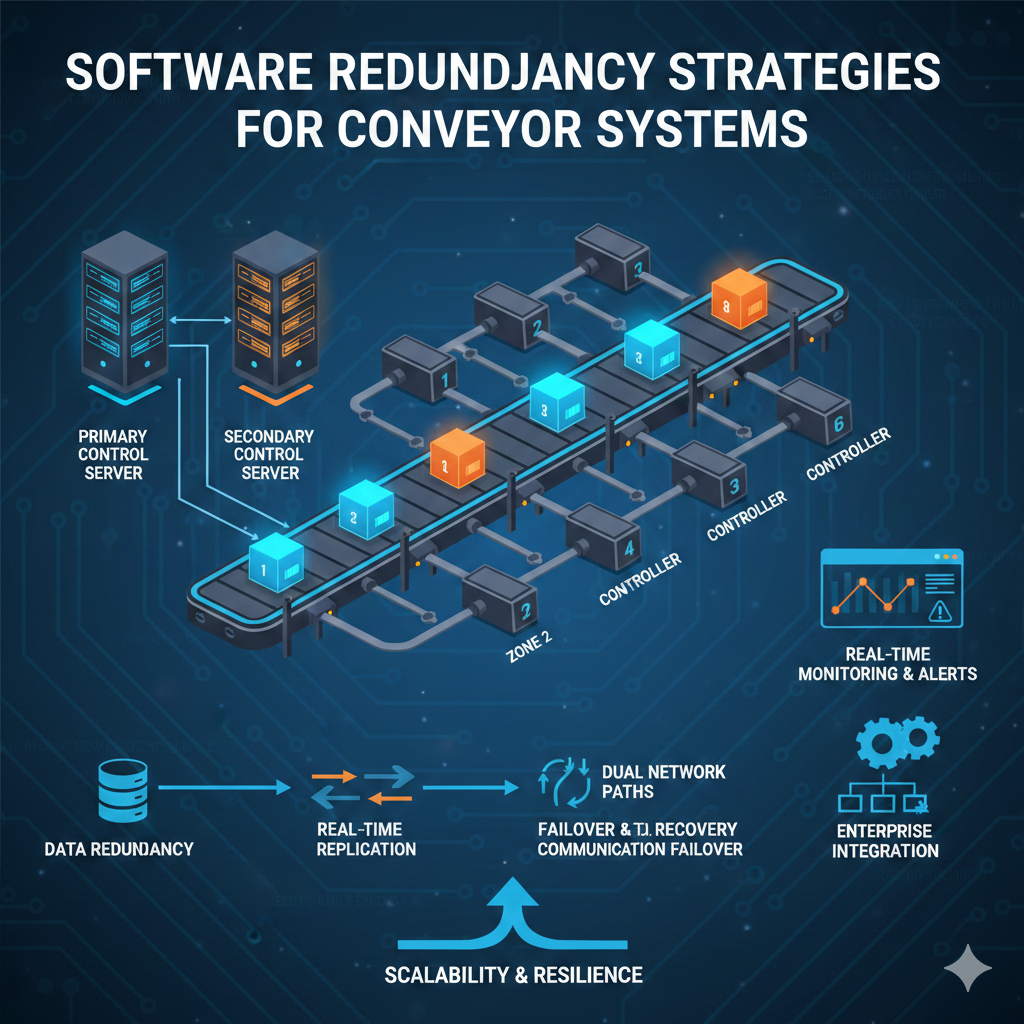
Resilience and Fault Tolerance 🛡️
- Isolates failures to specific zones 🚧
- Reroutes flow around problem areas 🔀
- Maintains operations during partial outages 🔄
- Improves overall system uptime 📈
Benefits for High-Volume Warehouses ✅
- Higher and more consistent throughput 📈
- Faster order fulfillment 🚚
- Reduced congestion and downtime ⏱️
- Lower operating and maintenance costs 💰
- Improved accuracy and customer satisfaction 😊
- Greater flexibility for future growth 🌱
Final Thoughts 🏁
In high-volume warehouses, conveyor software is not just a control layer—it is the intelligence that keeps operations moving at scale. By enabling real-time control, dynamic routing, predictive maintenance, and deep system integration, modern conveyor software allows warehouses to operate faster, smarter, and more reliably. For facilities handling massive order volumes, investing in robust conveyor software is a critical step toward sustained operational excellence and competitive advantage. 🚀
See more blogs
You can all the articles below