Event-Driven Conveyor Control Explained
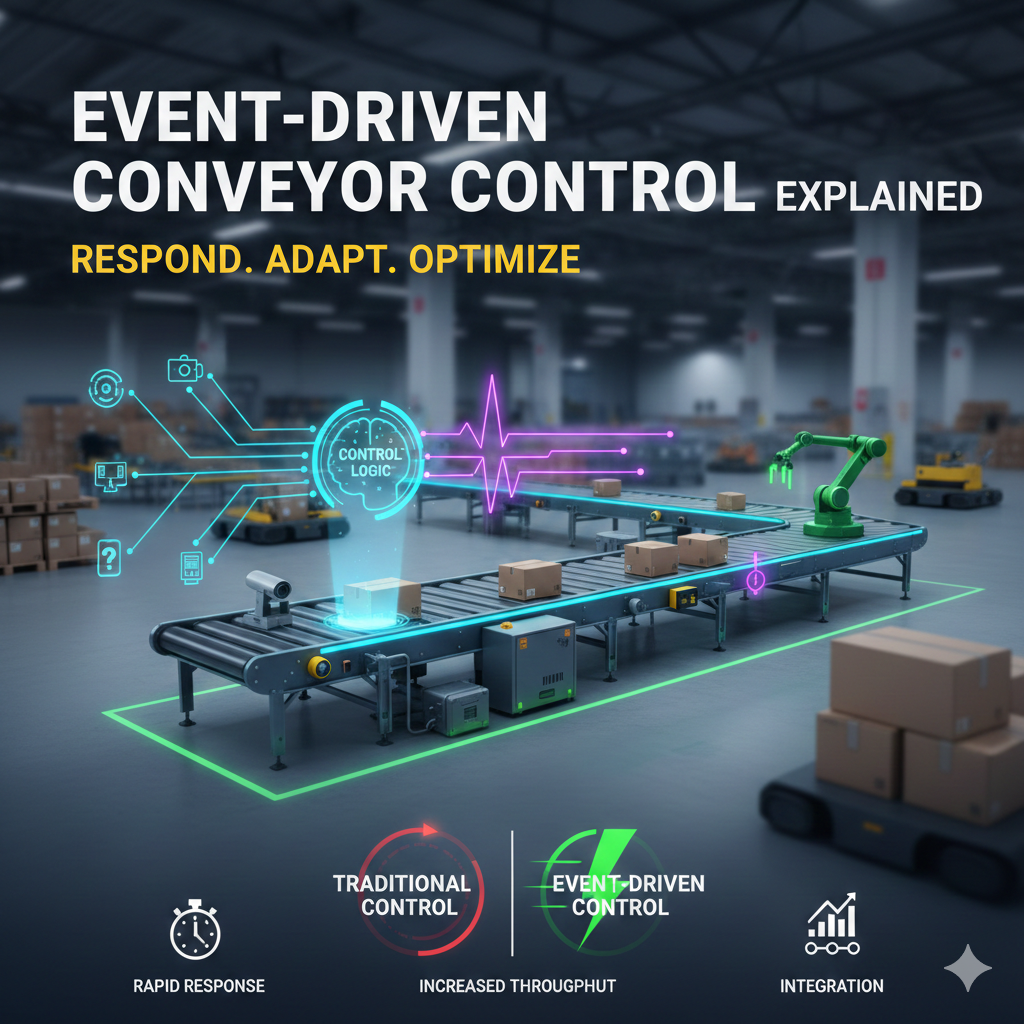
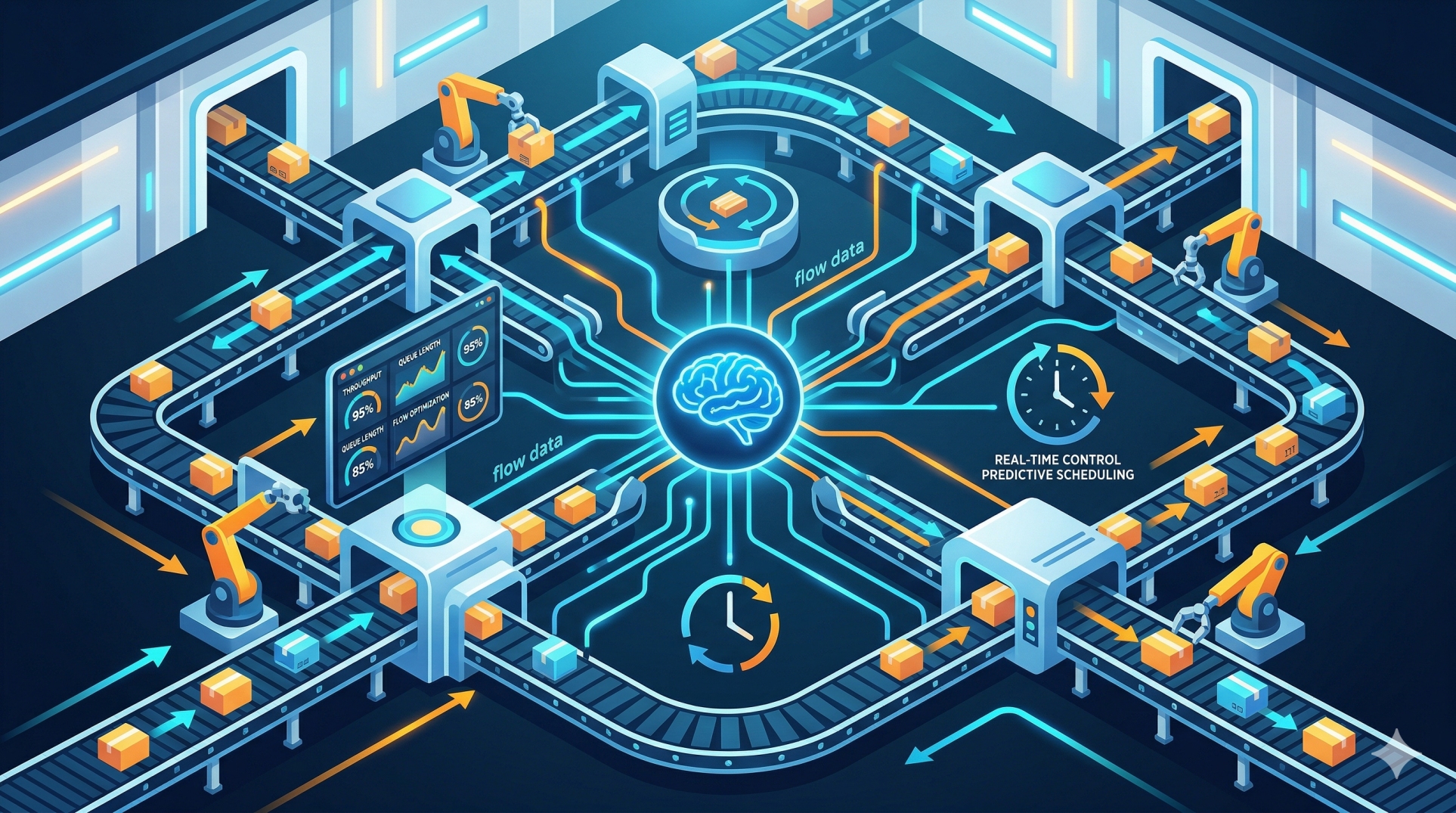
Modern conveyor environments must react quickly to changing order volumes, equipment conditions, and material flow. Traditional conveyor control depends on constant polling and fixed logic, which can slow responses and waste system resources. Event-driven conveyor control provides a more efficient approach by responding instantly to specific events, improving system speed, flexibility, and reliability.
🔔 What Is Event-Driven Conveyor Control
• A control model where system actions are triggered by events ⚡
• Events include sensor inputs, item arrivals, equipment status changes, and alerts 📡
• Eliminates the need for continuous status checking 🔄
• Enables fast, targeted system responses 🎯
⚙️ How Event-Driven Conveyor Control Works
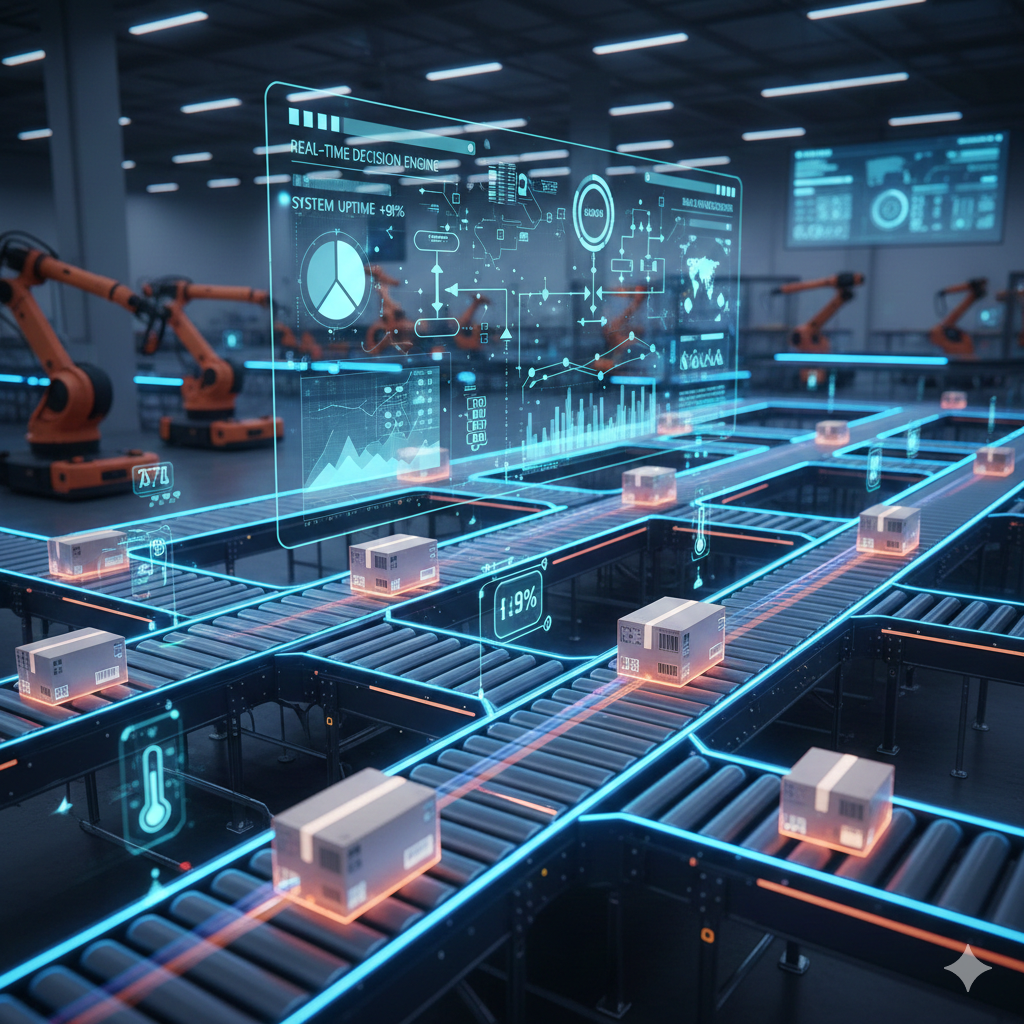
• Sensors detect events such as item arrival at a checkpoint 📍
• Event data is sent to the control layer 🔗
• The control logic processes the event 🧠
• The system triggers actions like routing, stopping, or adjusting conveyor speed 🔄
📦 Common Events in Conveyor Systems
• Item detection and identification 🏷️
• Conveyor start and stop commands ▶️⏹️
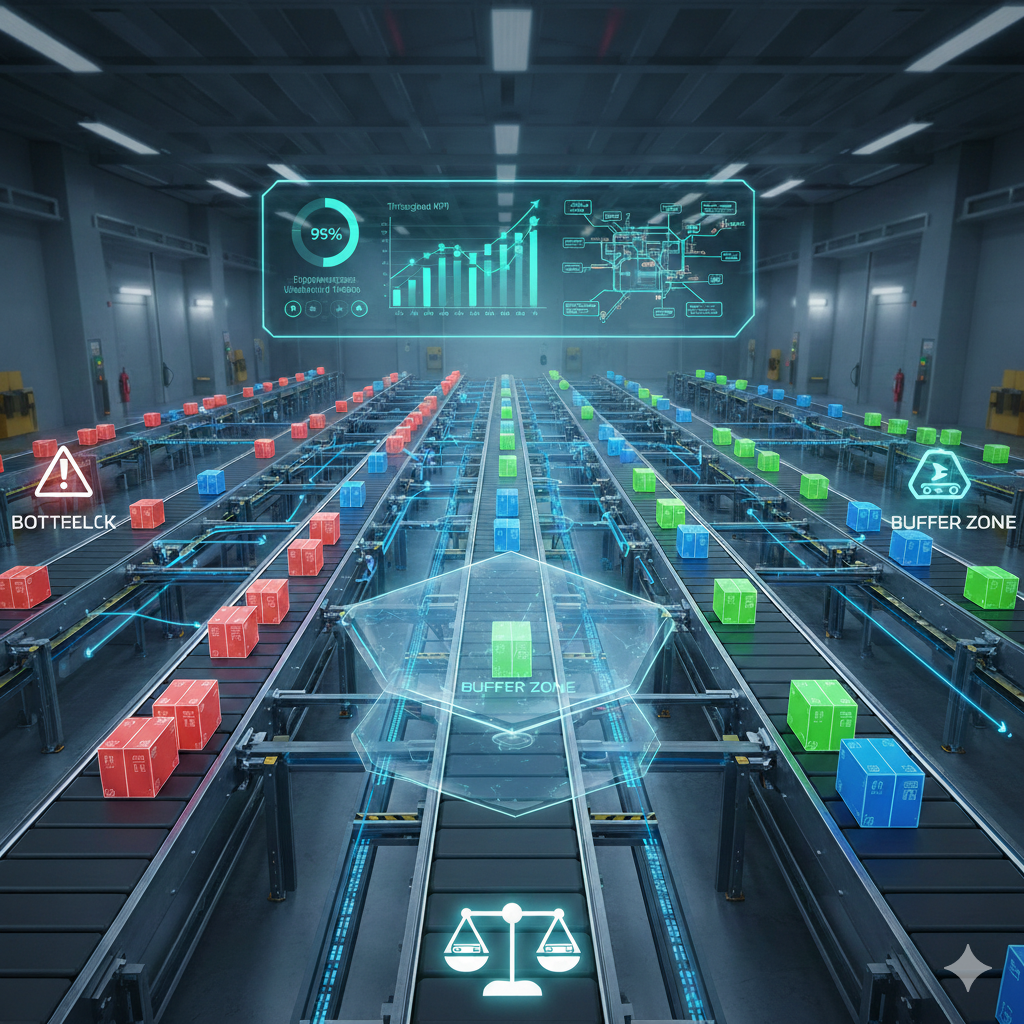
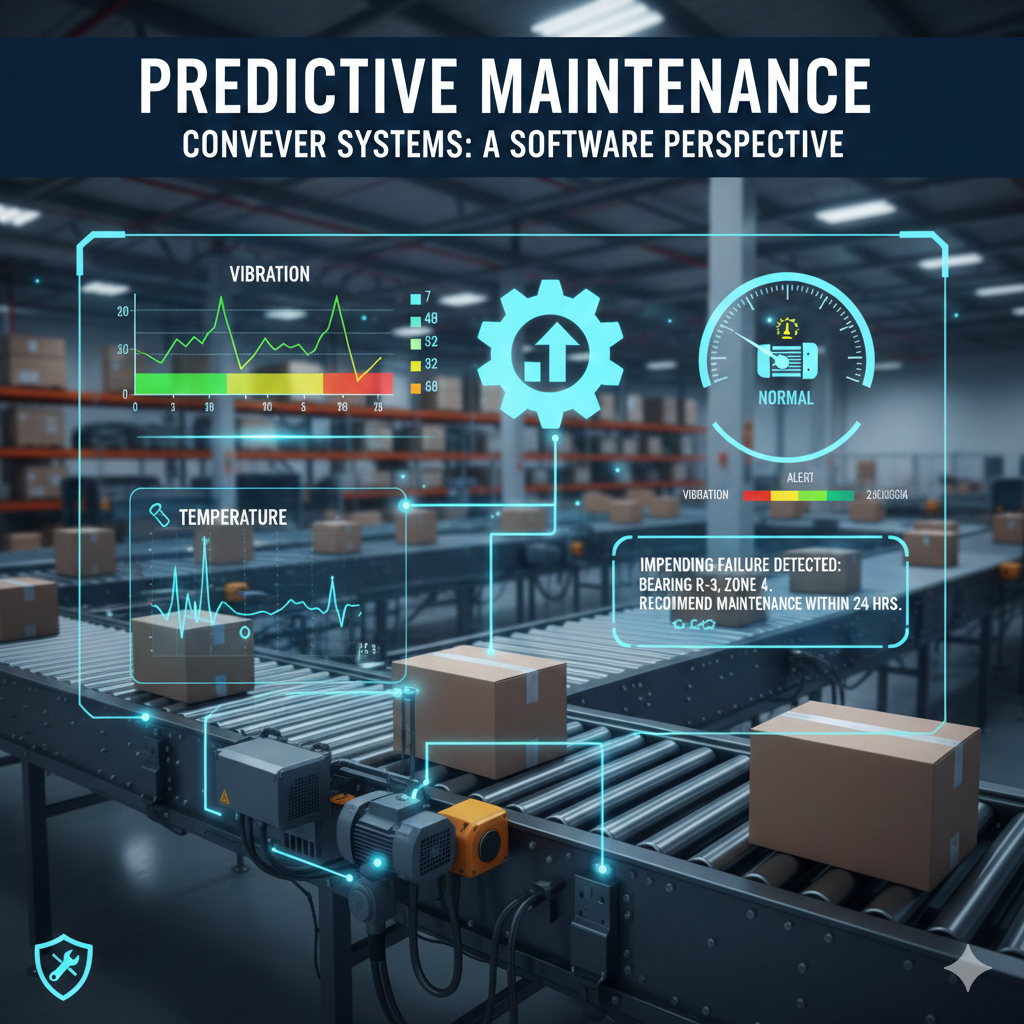
• Jam, blockage, or overload detection ⚠️
• Equipment faults and maintenance notifications 🛠️
• Completion of sorting or routing operations ✅
🔁 Traditional Control vs Event-Driven Control
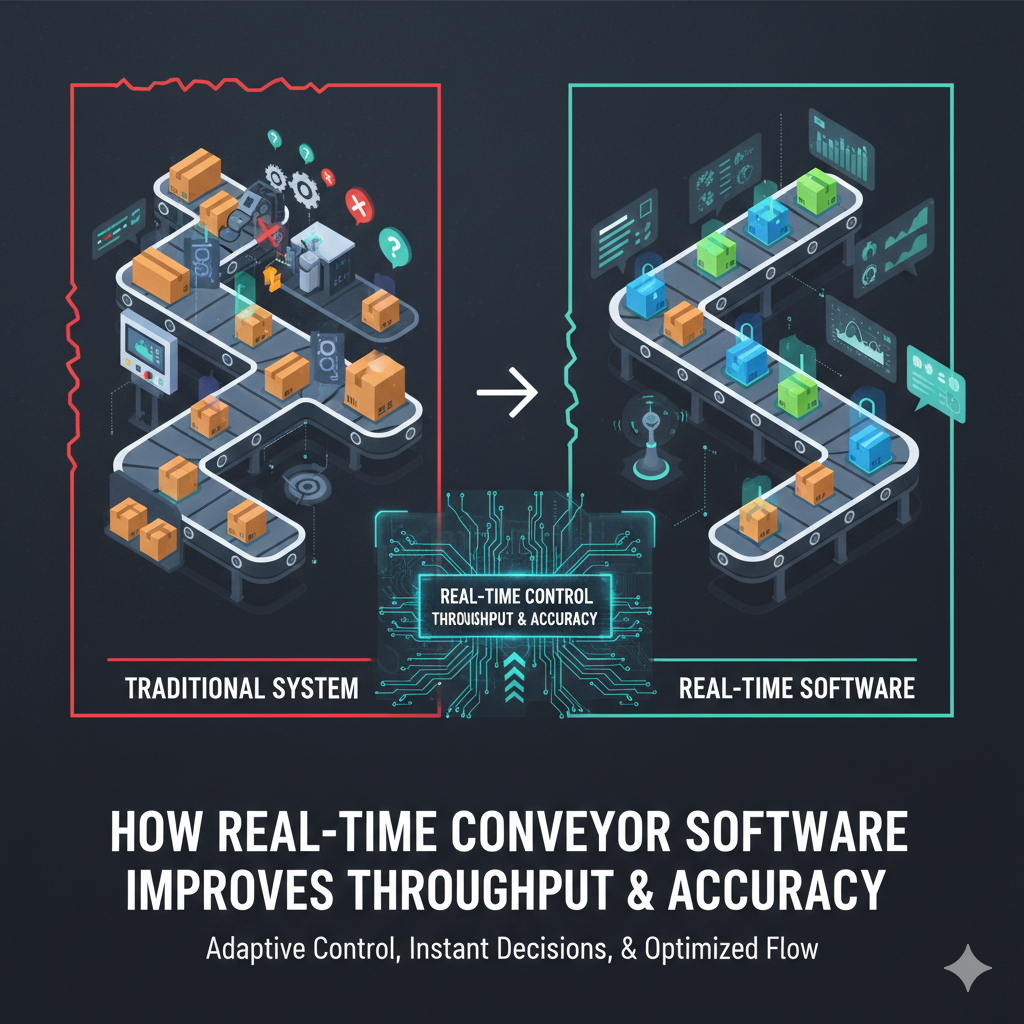
• Traditional systems continuously poll system status 🔄
• Event-driven systems act only when an event occurs ⚡
• Reduces unnecessary system processing 📉
• Delivers faster response times and improved efficiency 🚀
📈 Benefits of Event-Driven Conveyor Control
• Rapid response to real-time operational changes ⏱️
• Lower system latency and fewer delays ⚡
• Increased throughput and smoother material flow 📦
• Reduced computational and energy usage 🔋
• Easier exception handling and error recovery 🛠️
📡 Role of Sensors and Real-Time Data
• Sensors function as the primary event generators 📍
• Real-time data enables precise control decisions 🎯
• Barcode scanners, RFID, and vision systems create intelligent events 📷
• Data streams support advanced routing and tracking 📊
🔗 Integration with Modern Control Platforms
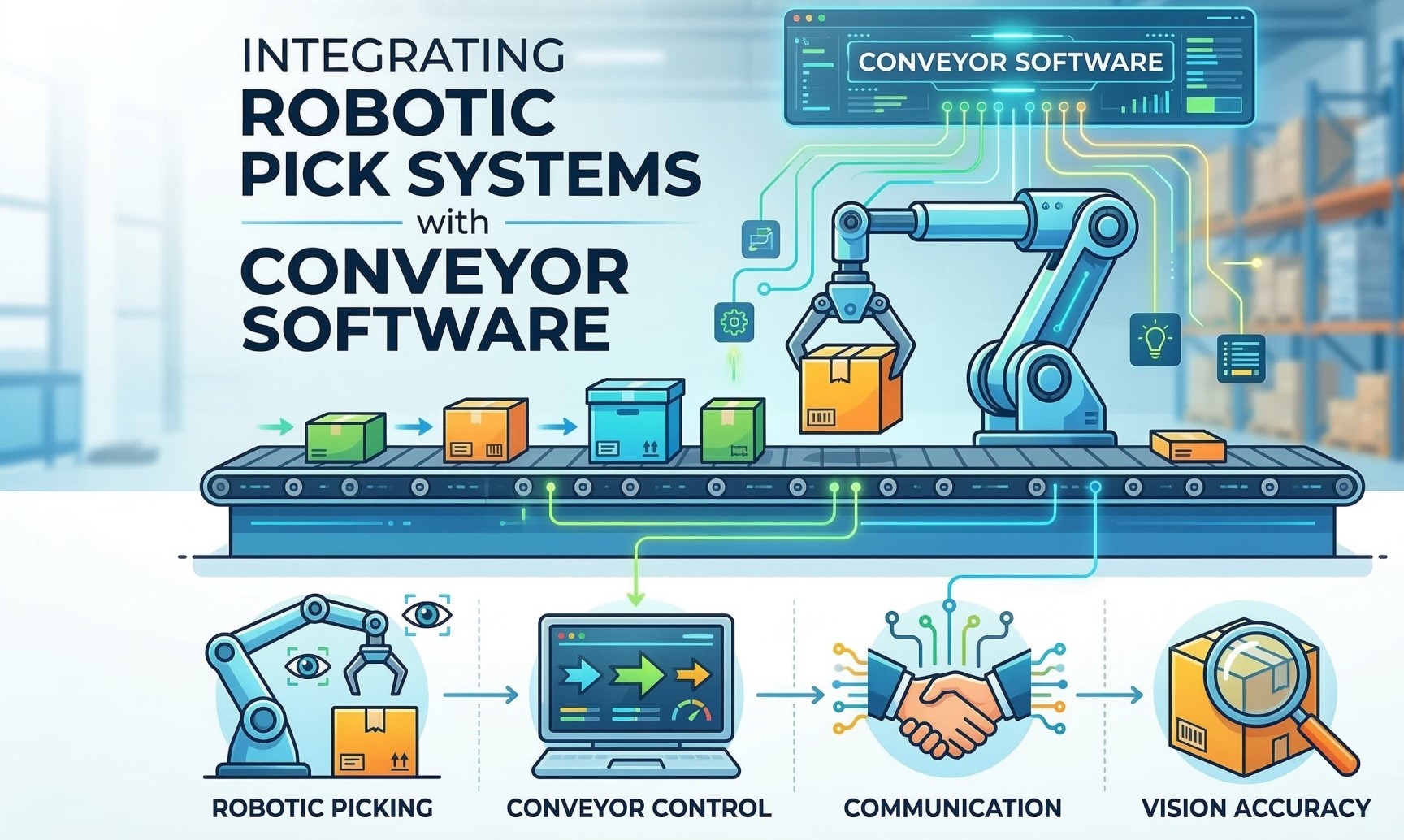
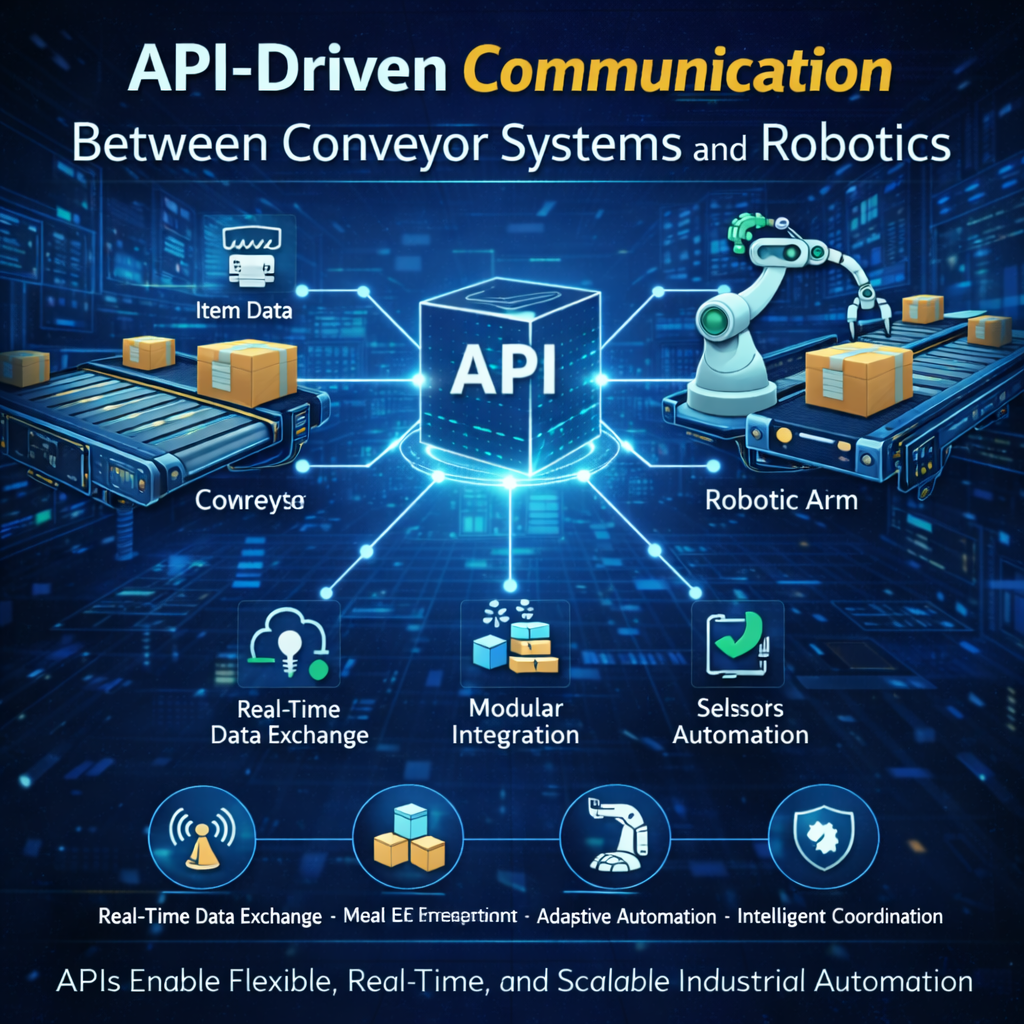
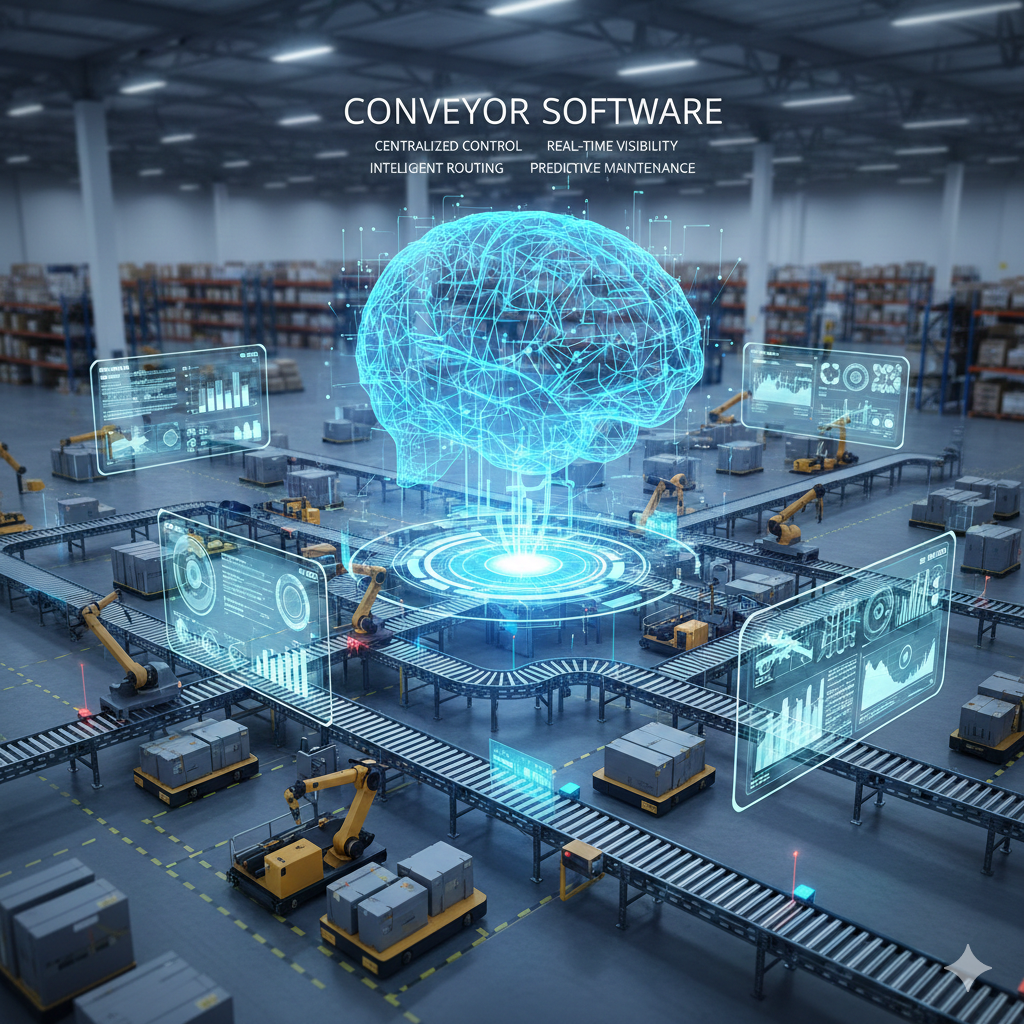
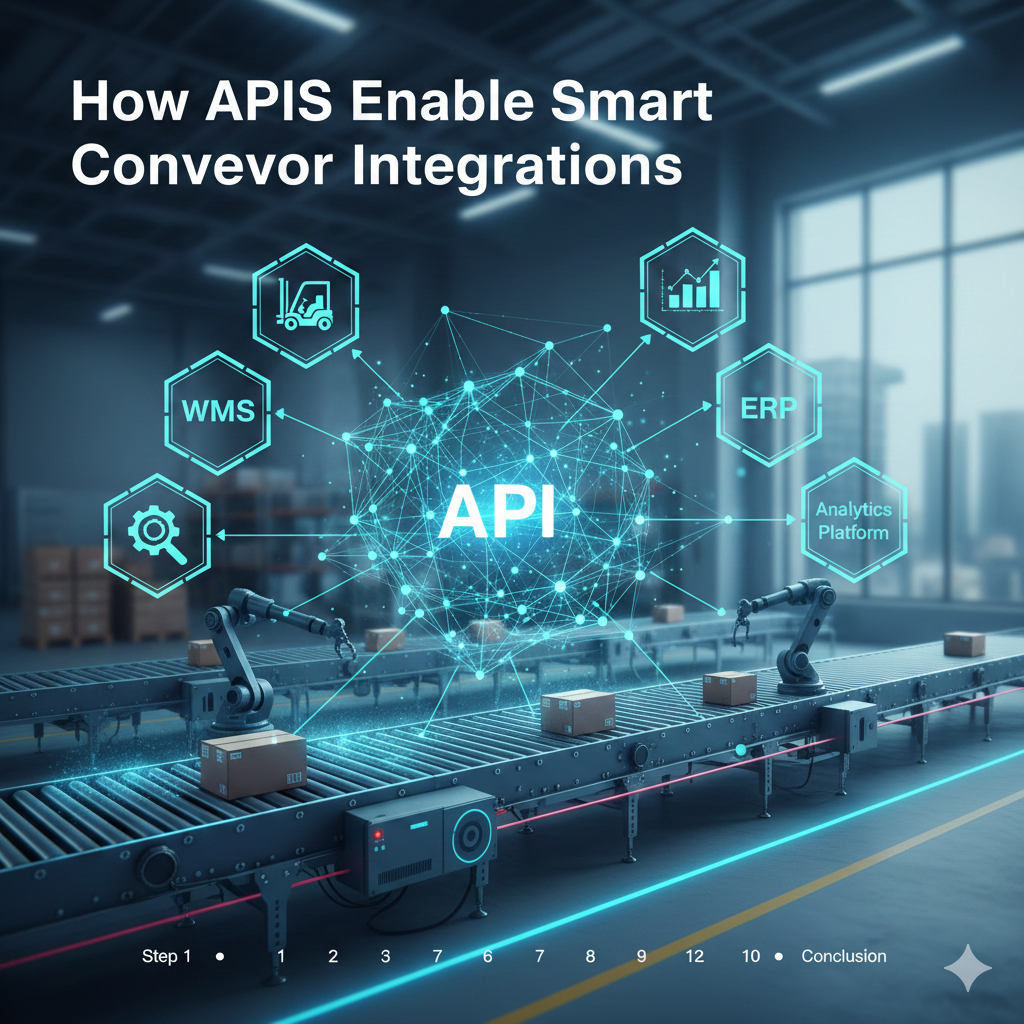
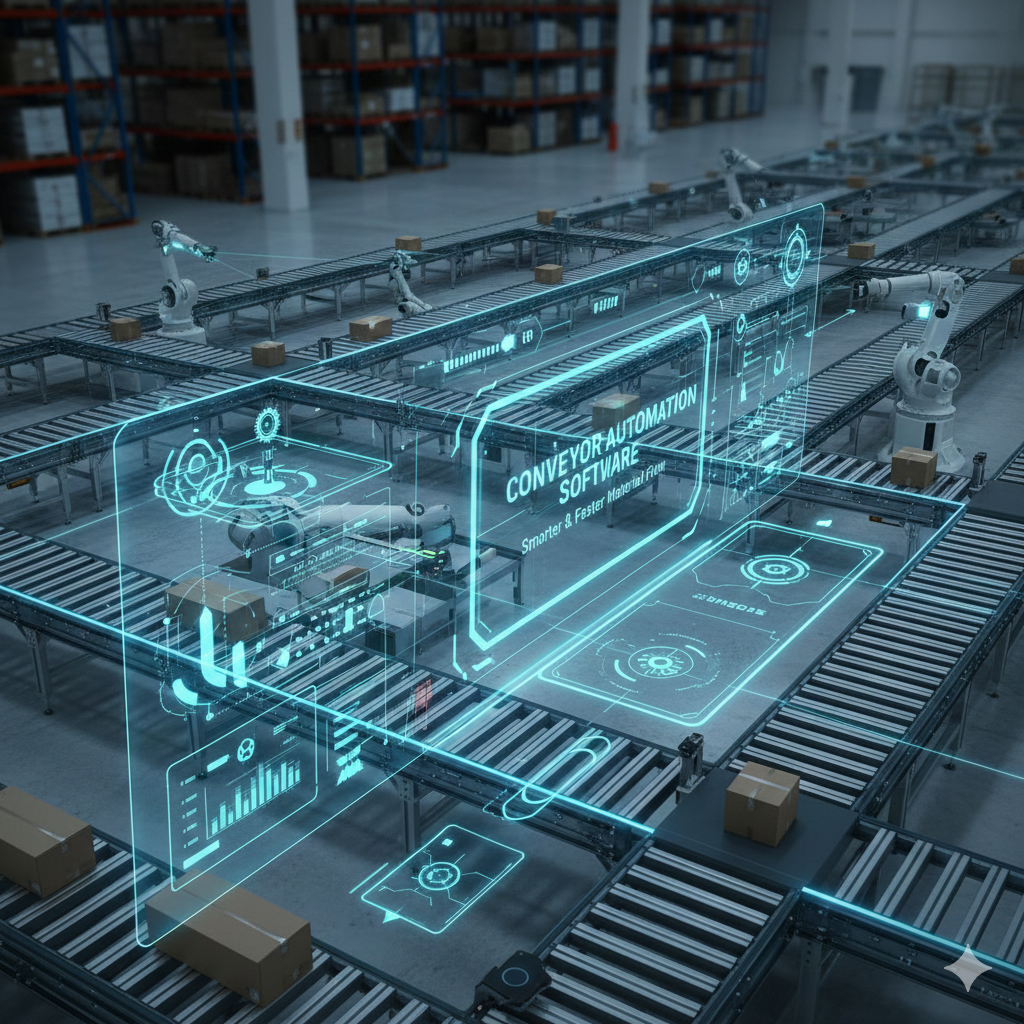
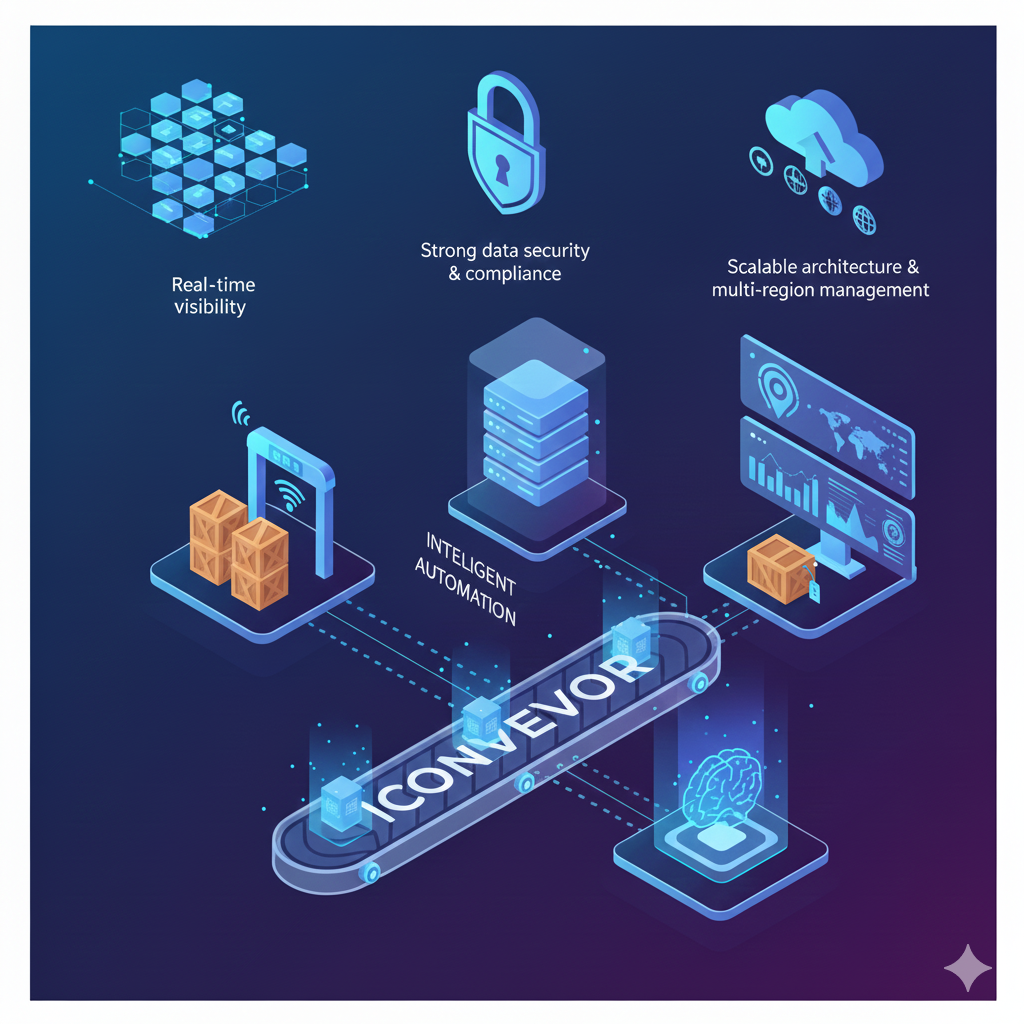
• Works alongside PLCs and warehouse control systems (WCS) ⚙️
• Integrates with warehouse management systems (WMS) 🏬
• Supports scalable, modular conveyor architectures 🧩
• Enables coordination across multiple zones and conveyor lines 🌐
🏭 Real-World Applications
• Distribution centers handling high-speed sorting operations 📦
• E-commerce warehouses managing fluctuating order volumes 🛒
• Manufacturing facilities coordinating material flow 🏗️
• Airport baggage handling systems ✈️
🤖 Event-Driven Control as a Foundation for Intelligence
• Enables real-time, responsive operations ⏱️
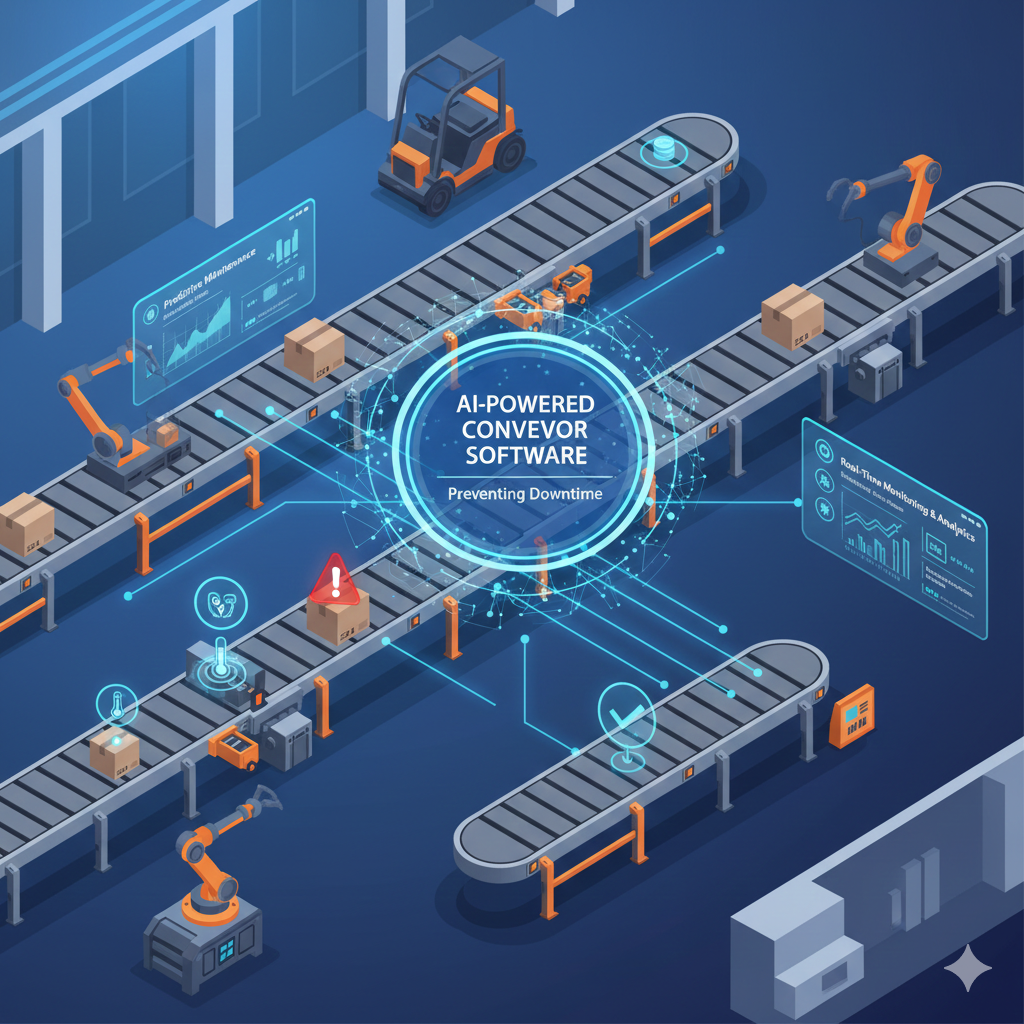
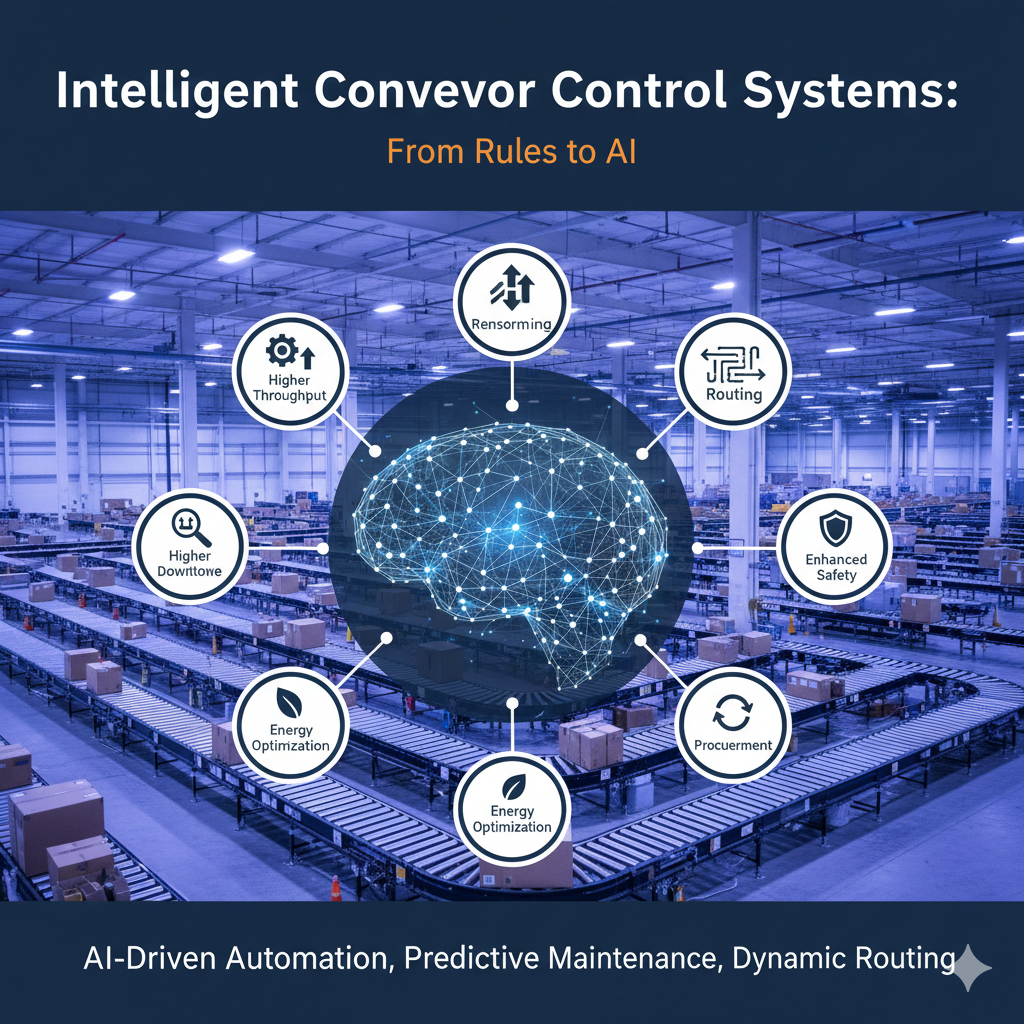
• Supports future integration with AI and predictive analytics 🧠
• Improves adaptability in dynamic environments 🔄
• Lays the groundwork for autonomous conveyor systems 🚀
Final Thoughts
Event-driven conveyor control represents a shift from rigid, polling-based automation to responsive, intelligent material handling. By acting only when meaningful events occur, these systems increase efficiency, reduce delays, and manage complexity more effectively 📈. As conveyor operations become more dynamic, event-driven control is emerging as a critical foundation for scalable and high-performance material handling systems 🌟.
See more blogs
You can all the articles below